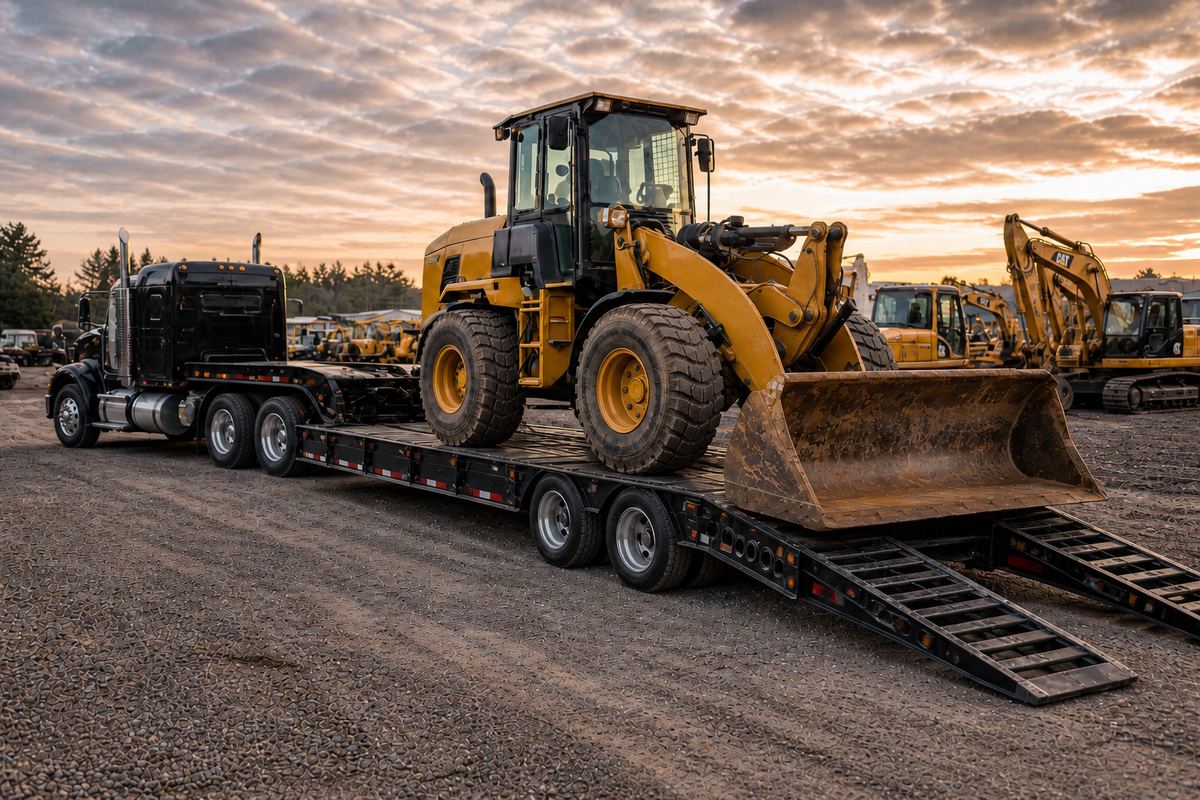
Confirm release and yard rules first
Equipment bought at auction may not be available for pickup until payment, buyer release, yard paperwork, or appointment rules are complete. Confirm the unit is released before treating pickup as ready.
Ask the yard who the pickup contact is, when loading is available, whether appointments are required, and where the unit is parked.
Auction equipment can be sold but not yet released. That difference matters before dispatch.
Machine details may be incomplete
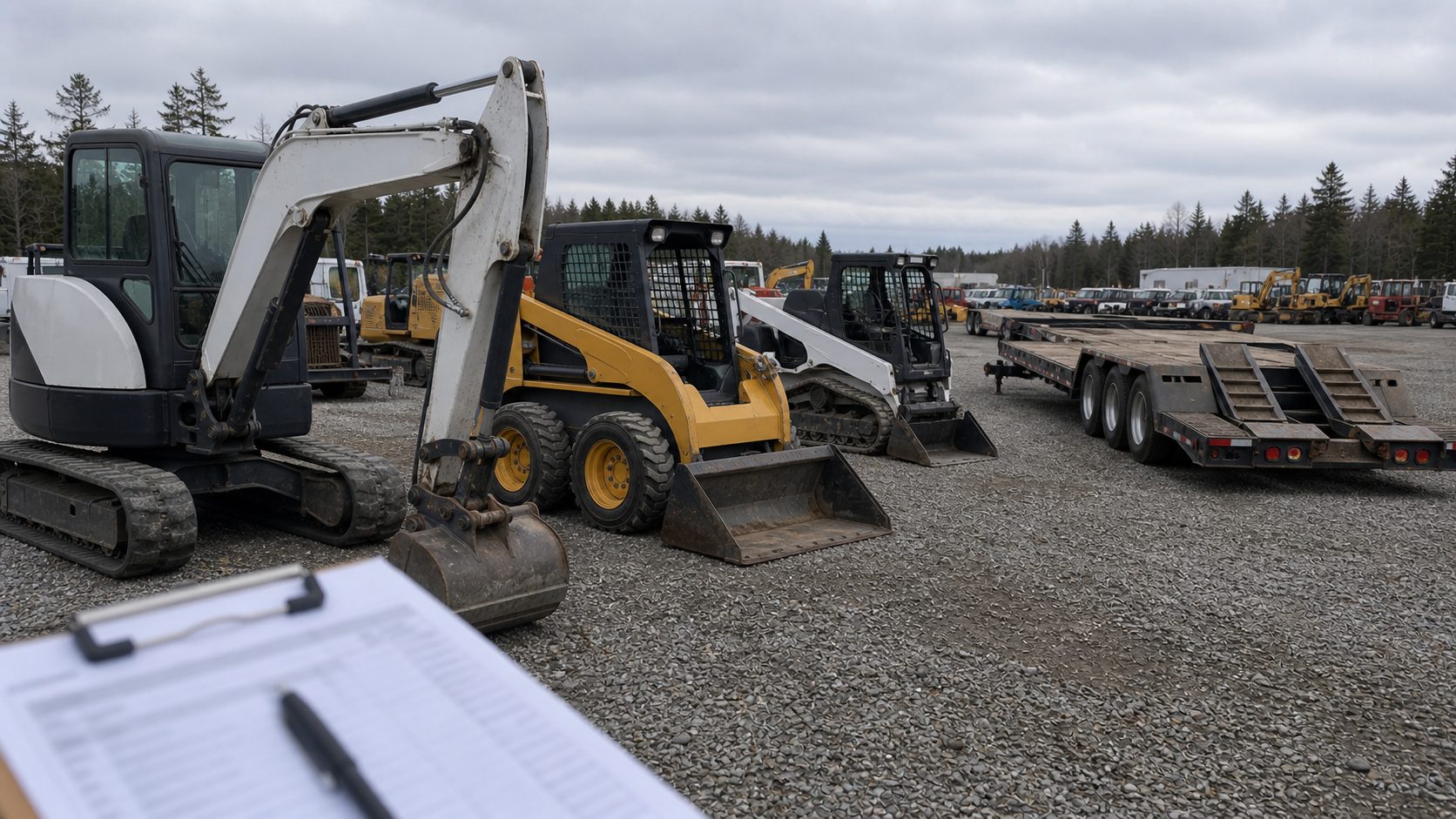
Auction listings often include photos and basic specs, but the transport plan may need more. Attachments, buckets, forks, blades, loose parts, tracks, tires, dead batteries, and unknown dimensions can all affect pickup.
If the listing is incomplete, send what you have and mark what is unknown. A model plate, current yard photo, or seller note can help fill gaps.
Listing includes model, weight, dimensions, and clear photos from several angles.
Listing shows the machine but does not confirm attachments, loading condition, or current access.
Loading support should be confirmed
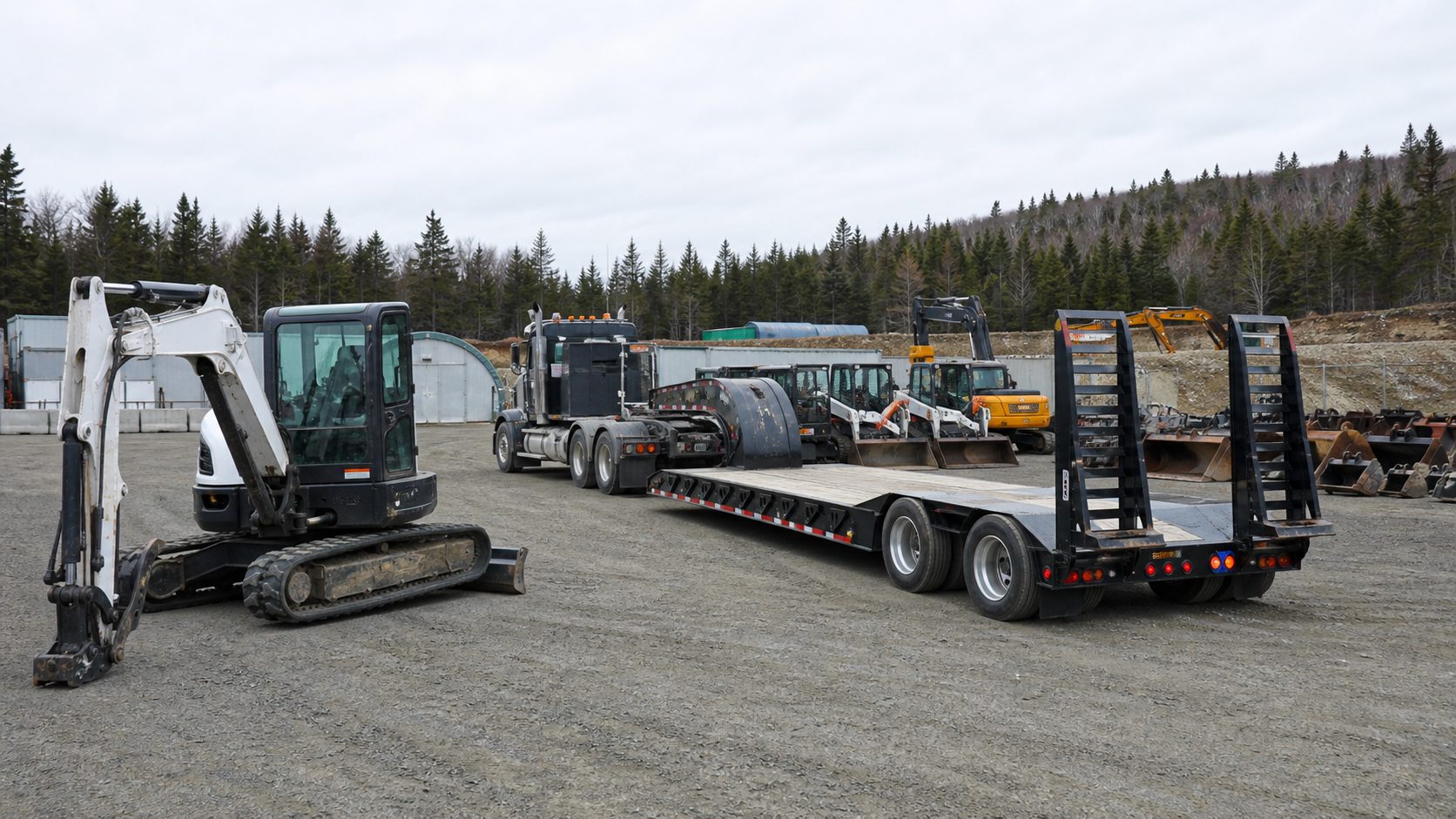
Some auction yards provide loading support. Others expect the unit to move under its own power or require appointments. A machine that does not run, has track issues, or sits in a tight row may need extra coordination.
Before scheduling, confirm whether the yard can load, whether an operator is available, and whether the driver needs specific instructions.
Delivery access completes the pickup plan
Auction pickup is only half the move. The destination needs a contact, unloading space, and any notes about gates, ground surface, timing, or equipment needed to unload.
If the equipment is headed to a jobsite, farm, storage yard, or remote location, include those details early so the move can be reviewed from yard release through final delivery.
This is especially important for equipment because delivery may require an operator, space to unload, firm ground, or help handling attachments. The destination should be ready before the pickup is treated as solved.
- Auction name and lot number
- Release confirmation
- Machine specs and photos
- Attachments and loading condition
- Yard loading rules
- Delivery contact and access notes
Auction equipment works best with a complete handoff
A good auction equipment pickup has a clear handoff from buyer to yard to carrier to receiver. The yard knows the unit is released. The carrier knows what is being picked up and how it can be loaded. The receiver knows when it is coming and how it can be unloaded.
When any part of that handoff is vague, the move becomes fragile. A lot number without release is not enough. Photos without loading information are not enough. A delivery address without an unloading contact is not enough. The complete handoff is what makes auction equipment transport workable.
Auction equipment transport needs release, loading, and delivery details connected before scheduling.
Why equipment auctions need more detail than vehicle auctions
Auction equipment often has more variables than an auction car or pickup. The machine may have attachments, unknown dimensions, uncertain weight, loading requirements, or site access concerns. It may need an operator, yard loader, or specific loading window.
That means the transport request should include more than the lot number. The lot number finds the unit; the machine details explain how it can be moved.
If the buyer can send photos, attachment notes, release instructions, and delivery access together, BEMAC can review the pickup more realistically.
Lot number and pickup address help, but equipment also needs loading, dimensions, attachment, and access context.
Released skid steer with bucket attached, yard can load during business hours, delivery site has gravel pad and contact on site.