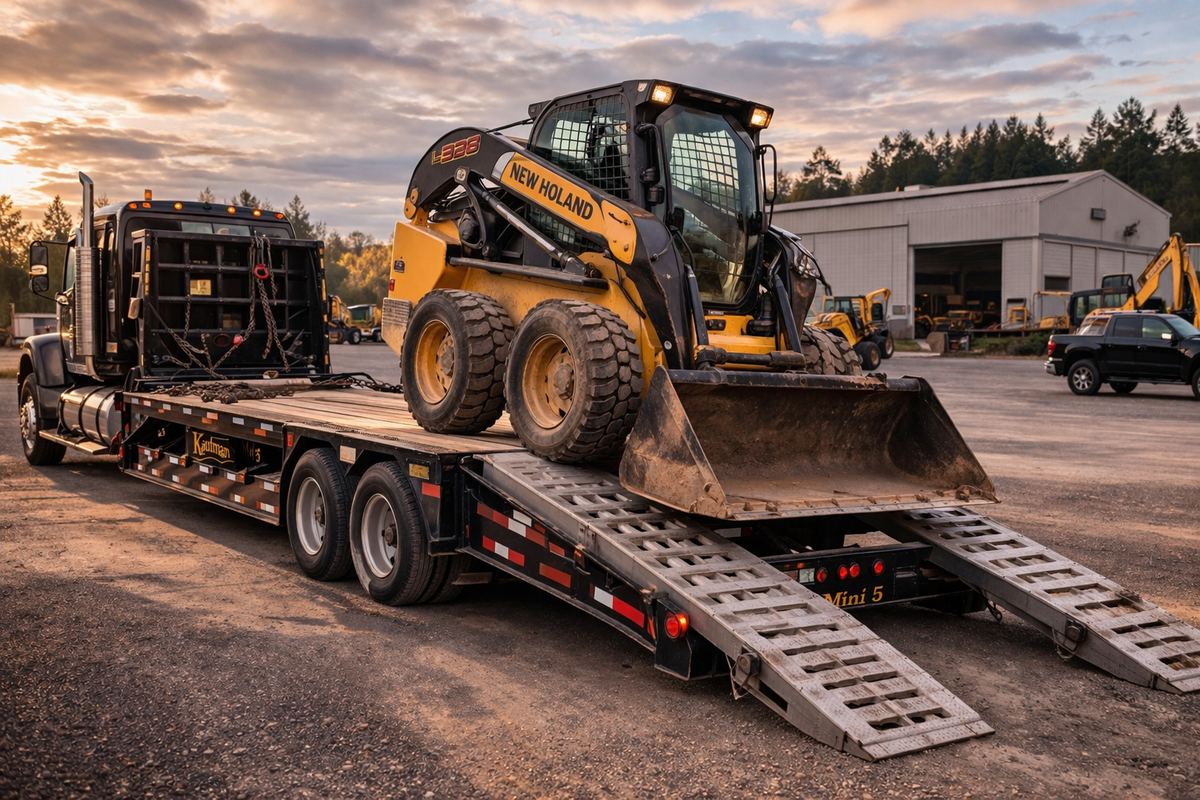
Start with the surface and space
Transport loading needs firm ground, room to line up, and enough space to move without guessing. Gravel, pavement, packed dirt, mud, snow, slope, and tight yards all create different conversations.
A wide photo of the loading area often explains more than a written description.
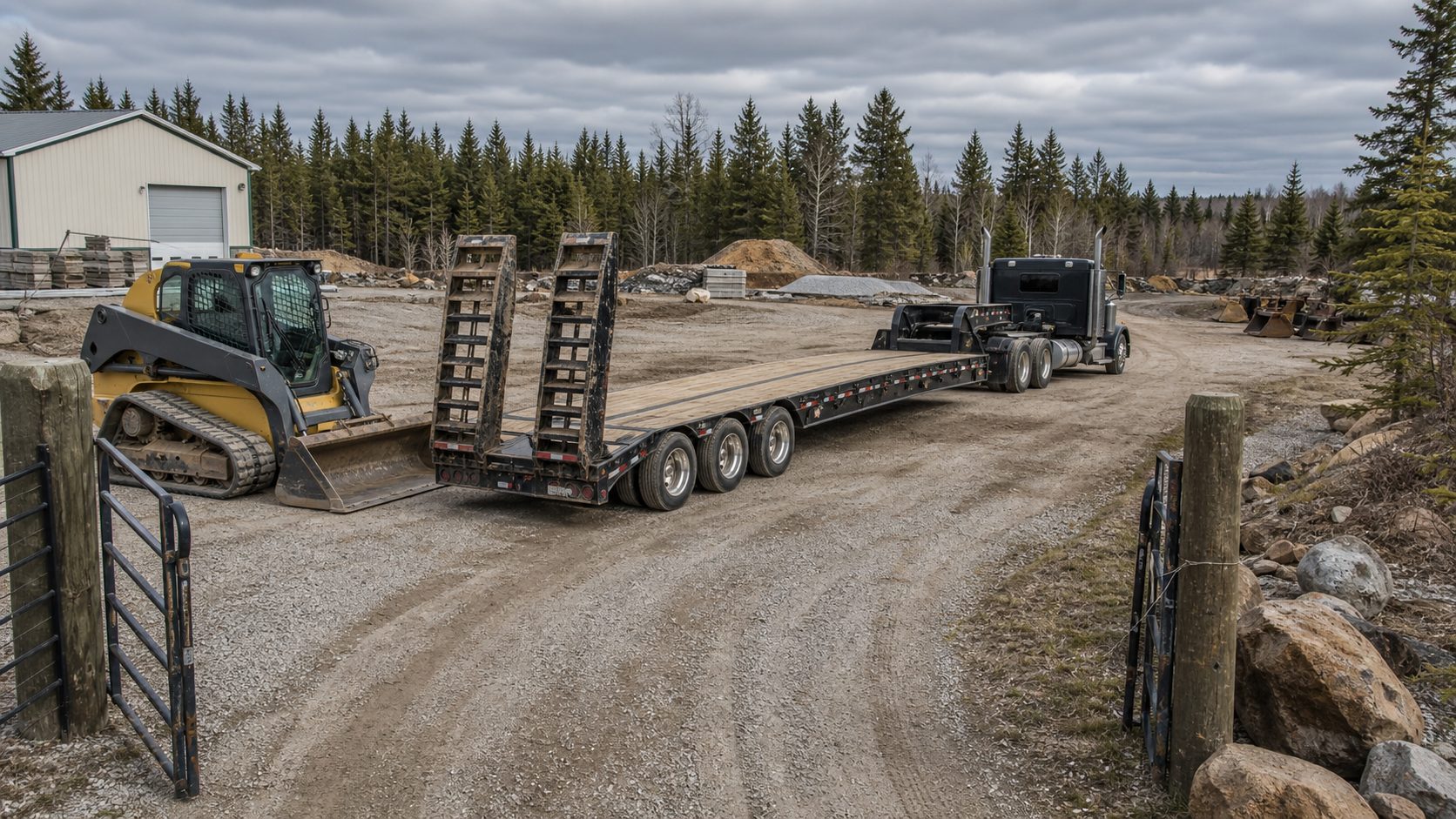
Say whether help is available
Some equipment can load under its own power. Other moves may need an operator, yard loader, forklift, dock, ramps, winch support, or another machine on site.
If loading support is available only during certain hours, include that timing.
Yard has an operator and loader available weekdays until 3.
Machine does not run, and no one has confirmed how it can be loaded.
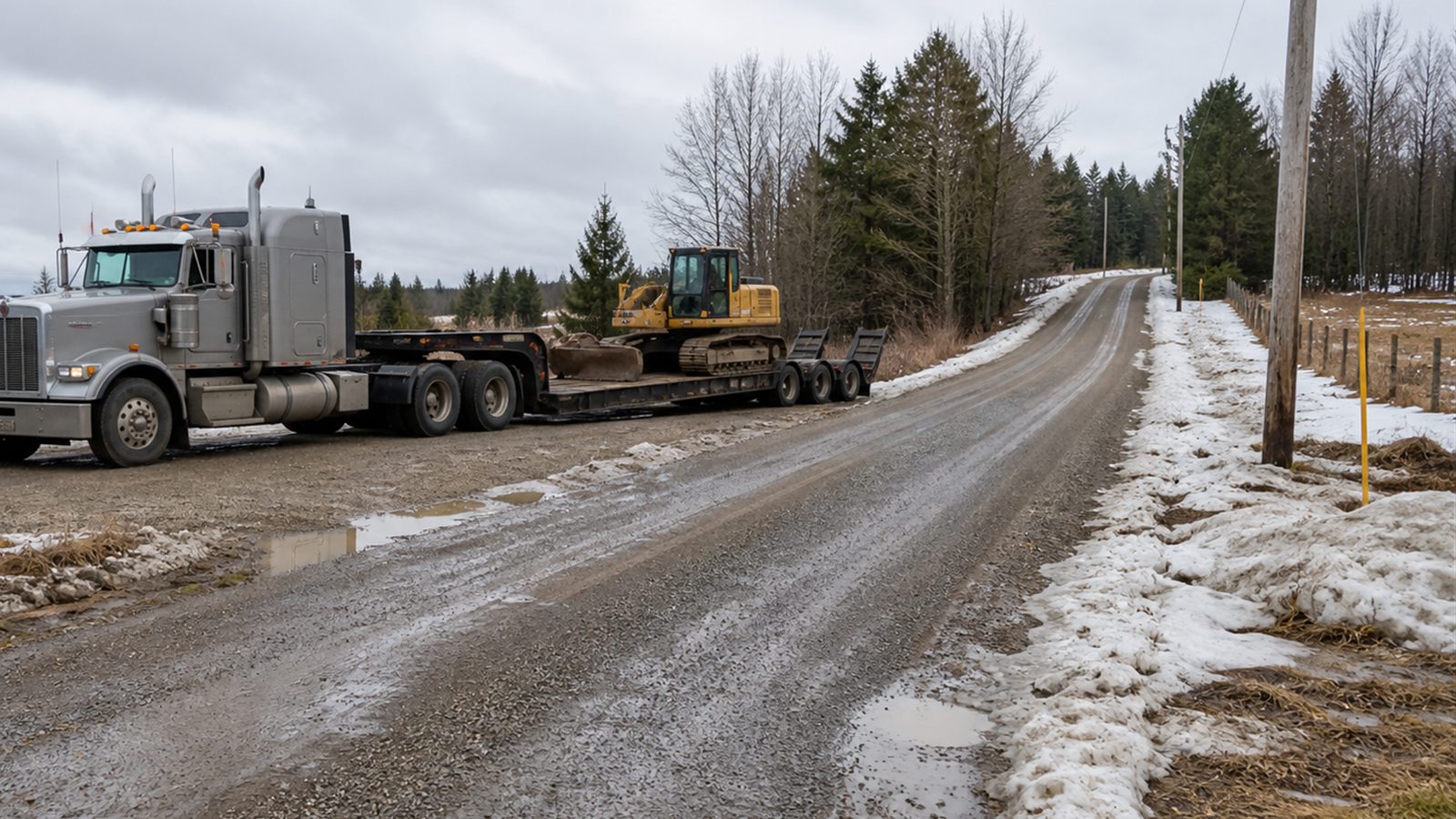
Unloading needs the same attention
Customers often describe pickup carefully and forget delivery. The receiving location also needs space, surface, contact, hours, and any unloading support.
A delivery site that cannot unload can create the same problem as a pickup site that cannot load.
Good condition notes prevent surprises
Describe both ends in plain language. The goal is not technical perfection; it is making the site reality visible before the truck arrives.
- Ground surface
- Slope or soft spots
- Turning and trailer room
- Loading or unloading help
- Site hours and contacts
- Photos of both ends