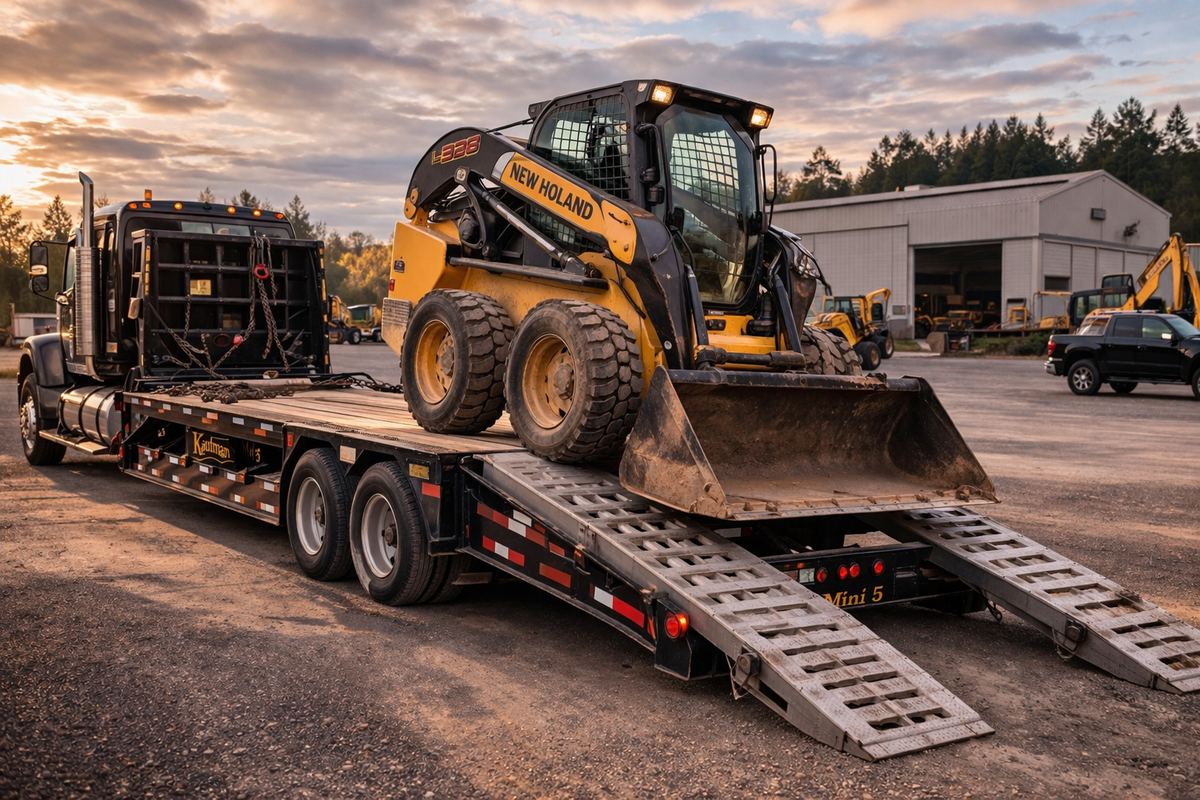
Identify the exact machine and setup
Start with the machine type, make, model, and current configuration. Compact equipment can vary more than people expect. Two skid steers may look similar in a listing, but tracks, tires, cab height, buckets, forks, attachments, and loose implements can all change transport planning.
The goal is to understand the machine as it will actually be picked up. A listing title may say "skid steer," but the transport details depend on the current setup. Is the bucket attached? Are forks included? Is there an extra attachment sitting beside it? Is it a tracked machine or a wheeled unit? Does the cab or canopy affect height?
If the model is unknown, clear photos can still move the review forward. A model plate photo, a full side photo, and a photo of the attachment area often answer more questions than a rough description.

List attachments before the quote is reviewed
Attachments can change the space needed on a trailer and the way the load is secured. A bucket on the machine is one thing; extra forks, augers, blades, grapple buckets, mowers, or loose implements are another. Those pieces may not look like much beside the machine, but they can matter once everything has to fit on a trailer.
If attachments are included, say whether they are mounted, loose, palletized, or stored separately. If they can be removed, mention that too. Photos help confirm size and handling needs, especially when the attachment is not standard or the seller is not familiar with transport requirements.
A compact machine plus attachments may need more deck space and different securement than the machine alone.
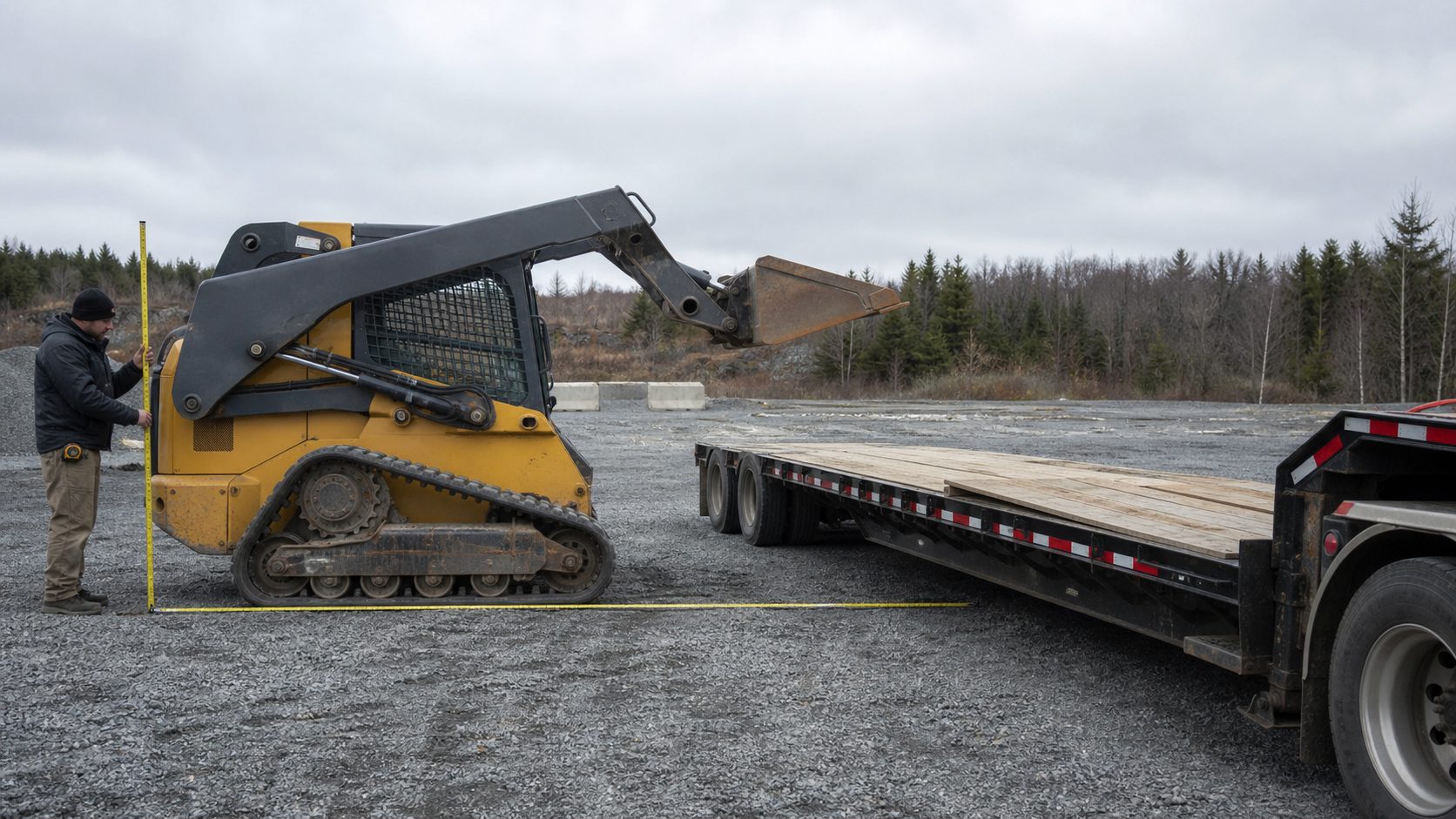
Measure the dimensions that affect fit
Compact does not always mean simple. Width, height, length, and weight still matter, especially with tracks, oversized tires, cab options, attachments, or tight pickup locations. A small machine can still become awkward if the attachment adds width or if the pickup area has limited room.
When exact specs are not available, send the best listed dimensions plus photos. If the machine has modifications or non-standard attachments, mention them before the quote is finalized. A rough dimension with clear photos is usually better than no dimension and no visual context.
For skid steers and compact track loaders, the most common details to confirm are overall width, overall height, length with the attachment installed, approximate weight, and whether loose attachments travel with the machine.
Tracks may affect width, weight, and loading surface requirements.
A grapple, mower, or snow blade can change the total deck space needed.

Confirm loading condition and site access
A skid steer that starts and drives is much easier to coordinate than one that needs help loading. Even when the machine runs, pickup access can create problems if the site is narrow, muddy, blocked, steep, or has limited room for a trailer.
Describe the ground surface, gate, lane, and loading space at both pickup and delivery. Compact equipment often comes from yards, farms, jobsites, auctions, and seller properties where access details matter. A wide photo of the entrance can be just as useful as a close photo of the machine.
If someone on site can operate the machine, include that contact. If the machine is non-running, has a dead battery, or cannot be moved easily, say so before scheduling.
A photo of the loading area can be as useful as a photo of the machine when access is tight or rural.
Send photos that answer the obvious questions
Photos should show the machine, attachments, and pickup setting clearly. They do not have to be professional; they just need to answer the questions that affect hauling. A good set of photos can confirm what the machine is, what travels with it, whether anything changes its dimensions, and whether access looks practical.
If the unit was bought at auction, include lot details and release information. If it is at a jobsite or farm, include a site contact and access notes with the photos. If the machine has attachments, take one photo wide enough to show how those attachments sit in relation to the machine.
- Front, rear, and both sides
- Attachment close-ups
- Tracks, tires, and undercarriage
- Model plate if available
- Pickup area and gate or lane
A wide side photo showing the whole machine, attachment, and ground surface.
A wide view of the entrance or loading area where the trailer will need to position.
What makes compact equipment deceptively tricky
Compact equipment can feel simple because the machine is smaller than a dozer, excavator, or loader. In practice, the details still matter. A skid steer may be compact enough for many sites but still heavy enough to require proper trailer fit, loading room, and securement planning.
The tricky part is that compact equipment often comes with context: an attachment sitting beside it, a tight residential or rural pickup, a muddy jobsite, an auction yard release process, or a seller who does not know the exact model. None of those details make the move unusual by themselves, but together they shape how the pickup should be reviewed.
That is why the best preparation is practical rather than complicated. Confirm what the machine is, what travels with it, whether it moves, where it sits, and who can answer questions on site.
For compact equipment, the pickup setting and attachments are often just as important as the machine model.
Preparing for scheduling
Once the machine, attachments, dimensions, condition, and access are clear, the scheduling conversation becomes much easier. At that point the quote is not trying to solve basic unknowns. It can focus on route fit, pickup timing, delivery timing, and whether any site coordination is needed.
For contractors, the important detail is often timing around a jobsite. For auction buyers, it may be the yard release window. For rural or farm pickups, it may be ground conditions, gate access, or whether someone can operate the machine. Those details belong in the request because they affect the real-world pickup.
A good compact equipment request does not need to be complicated. It should make the move easy to understand from the driver perspective: what is being picked up, what travels with it, where it sits, who can meet the driver, and where it needs to be unloaded.
That driver perspective is useful because it keeps the request grounded. If the driver needs to know it before arriving, it belongs in the quote conversation. If the detail affects loading, securement, access, or unloading, it is worth sending early.
For auction and dealer pickups, this preparation can also prevent confusion at the yard. The pickup contact can find the right unit, confirm what attachments are included, and understand whether the machine is expected to load itself. For private or rural pickups, the same preparation helps confirm that the site is actually reachable.
- Pickup contact and hours
- Delivery contact and unloading room
- Release or seller instructions
- Preferred timing or deadline
- Any site conditions that could affect loading