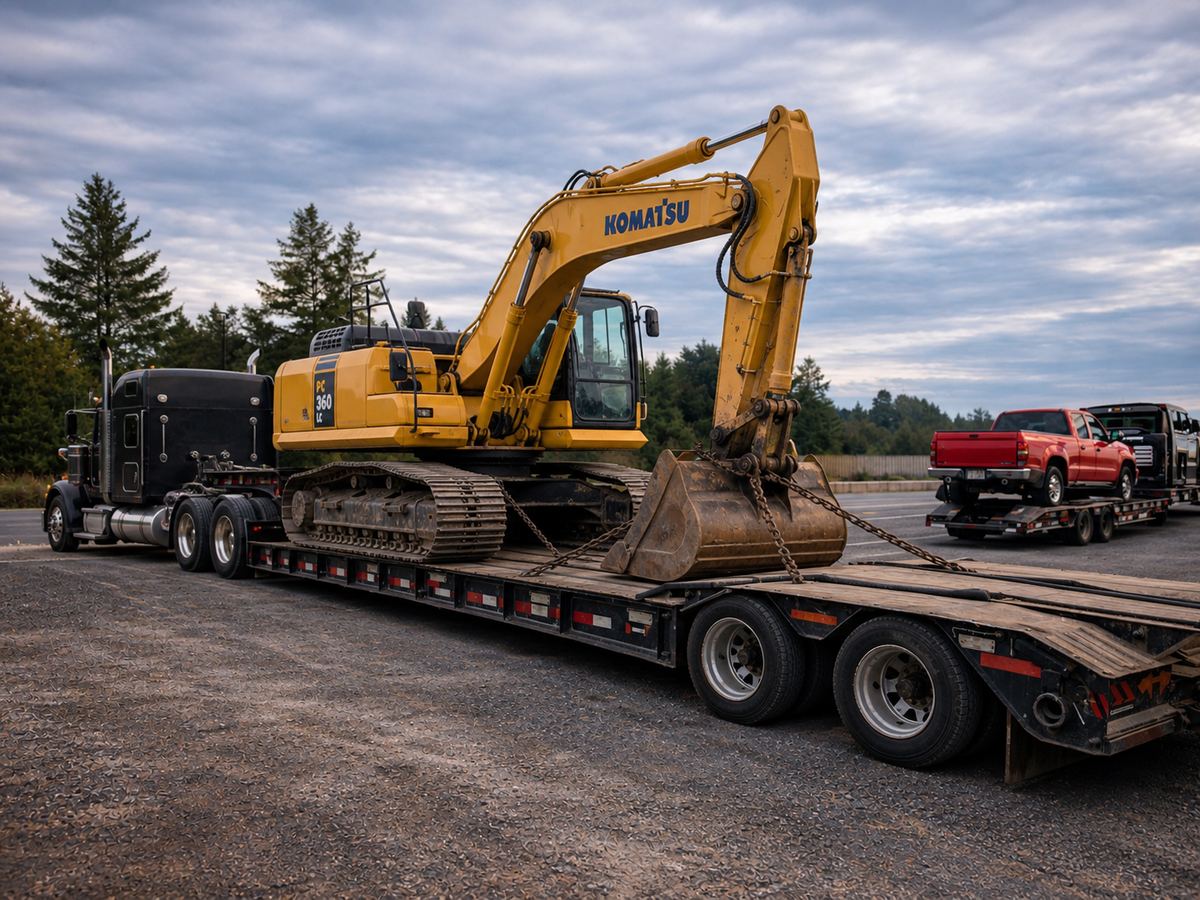
Length, width, and height each matter differently
Equipment dimensions are not just numbers on a spec sheet. Width can affect route and trailer fit. Height can affect clearance and loading position. Length can affect deck space, securement, and whether attachments need to be removed.
A useful quote request should include the best available dimensions and photos that show the machine as it sits. If dimensions are estimated, say that. If they come from a listing or manufacturer spec, mention the source.
A model plate, listing, and current photos together are often more useful than a guessed measurement by itself.
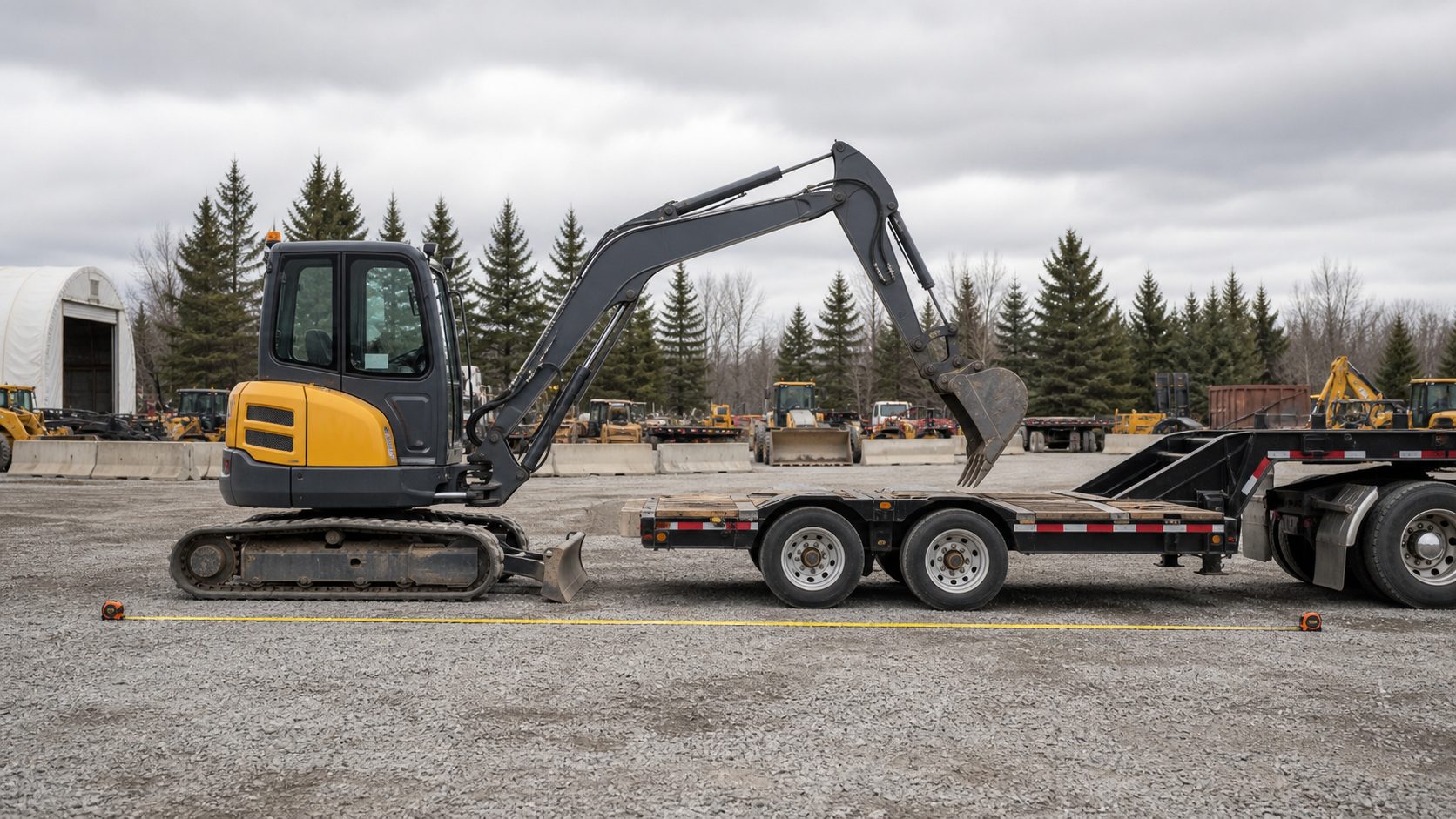
Attachments can change the dimensions
The listed machine dimensions may not include attachments in the way the unit will travel. Buckets, blades, forks, mowers, grapples, rippers, and loose implements can change the space required.
Before assuming a spec is complete, confirm whether attachments are installed, removable, or traveling separately. This is especially important for auction purchases and mixed equipment loads.
A bucket or blade may add length, width, or loading considerations.
A separate implement may need deck space even if it is not mounted on the machine.
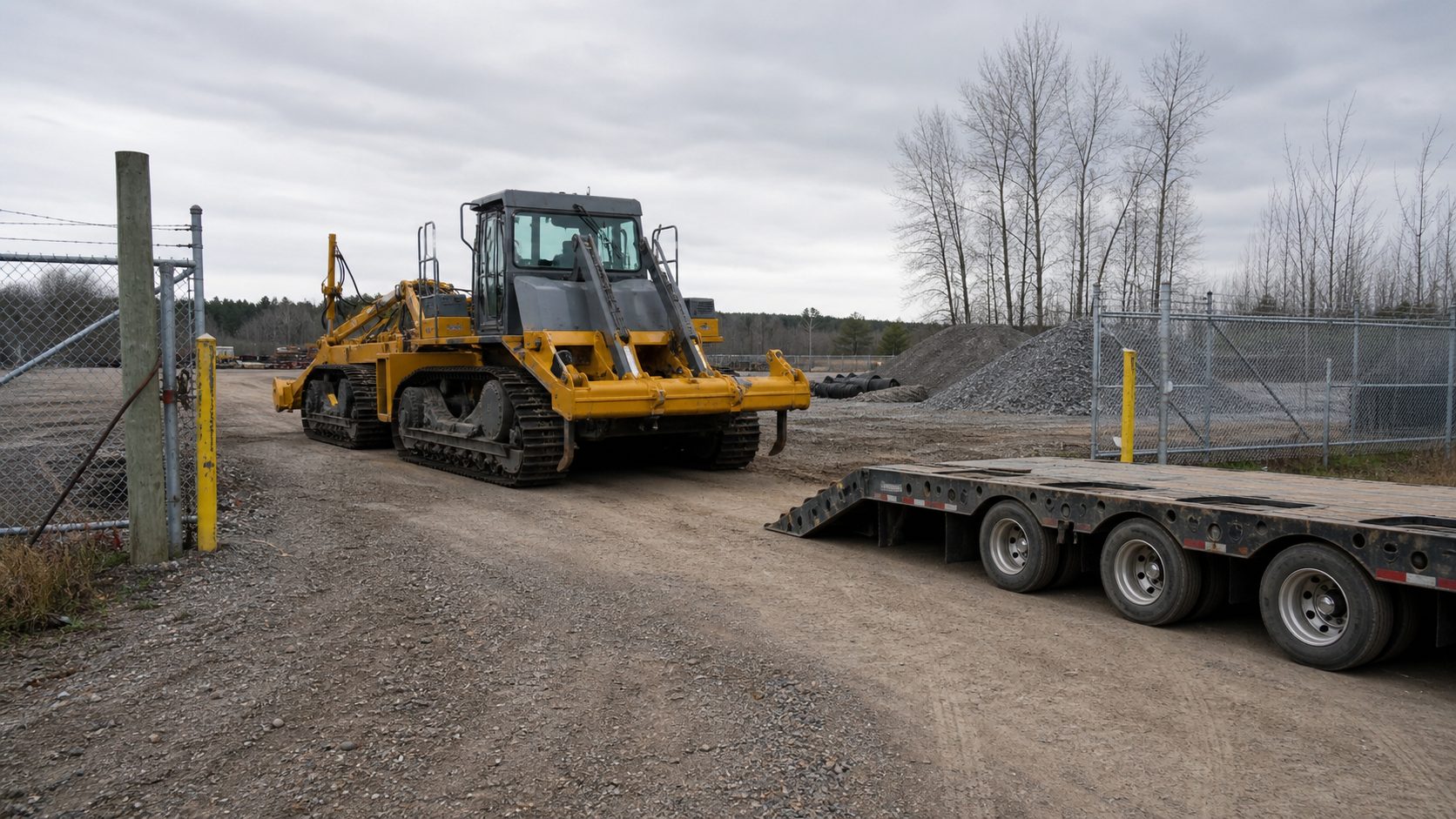
Dimensions connect to access
A machine may fit the trailer but still create an access issue at pickup or delivery. Gates, narrow roads, loading pads, overhead lines, trees, slopes, and soft ground can all matter.
When equipment is wide, tall, long, or heavy, send access photos as well as machine photos. The route review is stronger when both the load and the site are visible.
What to send when dimensions are uncertain
If exact dimensions are not available, send the best information you have. A model number, photos from all sides, attachment details, and a rough estimate can still help BEMAC identify what needs confirmation.
The important thing is not to hide uncertainty. If width is unknown, say it is unknown. If the machine has an extra attachment, send a photo. If the height may change depending on position, include that note.
This is common with auction units, older equipment, and machines bought through a third party. The goal is to build enough context to review the move, then identify which details still need confirmation before scheduling.
- Model or serial plate photo
- Listing specs if available
- Photos from all sides
- Attachment details
- Rough dimensions if exact specs are unknown
Photos can show what dimensions miss
A spec sheet may give numbers, but photos show how the machine is actually configured. They can reveal a bucket left on, extra tires, a cab height issue, a blade width, or a pickup setting that makes loading more complicated.
For transport planning, dimensions and photos work together. The numbers help estimate fit; the images help confirm whether the numbers describe the real machine in its current pickup condition.
Dimensions are part of the route, not just the load
It is easy to think of dimensions as a trailer-fit question, but they also affect route and site review. A wider machine may need more attention to roads and access. A taller machine may need clearance review. A longer machine may change loading and securement.
Those details become more important when equipment is moving between rural sites, jobsites, auction yards, or remote destinations. The machine has to fit the trailer, but the truck and trailer also have to fit the pickup and delivery environments.
That is why dimension details belong beside access notes and photos, not in isolation.