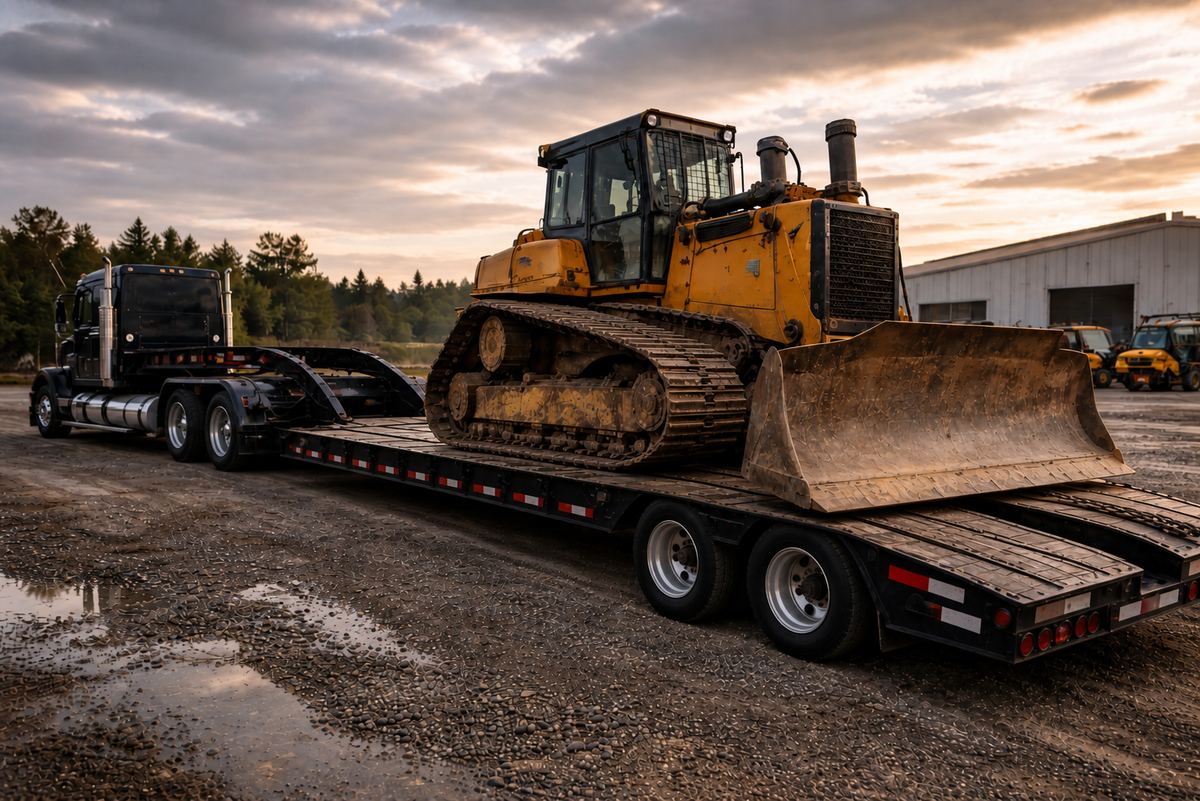
Bucket and machine size shape the move
Loaders can be compact, mid-size, or heavy, and the bucket can change length and width. A model number is useful, but photos of the full machine are just as important.
If forks, buckets, or attachments are included, list them separately.
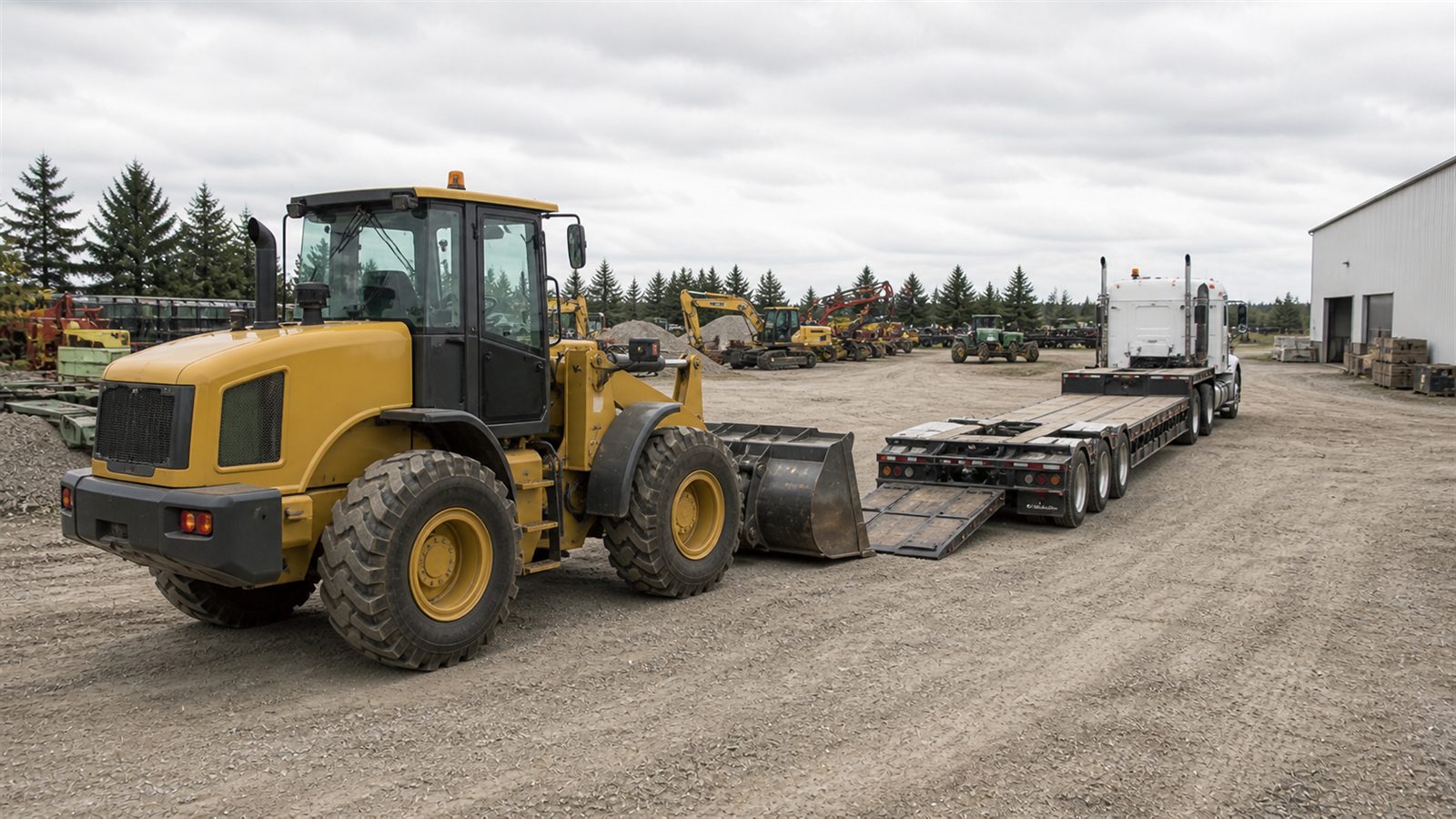
Weight and tire condition matter
Loaders are heavy for their footprint. Weight estimates, tire condition, running condition, and steering should be confirmed before pickup.
A loader with flat tires, no brakes, or unknown operation is a different move than one that drives normally.
Runs, steers, bucket attached, firm yard, loading contact available.
Older loader, tire condition unknown, machine has not moved recently.
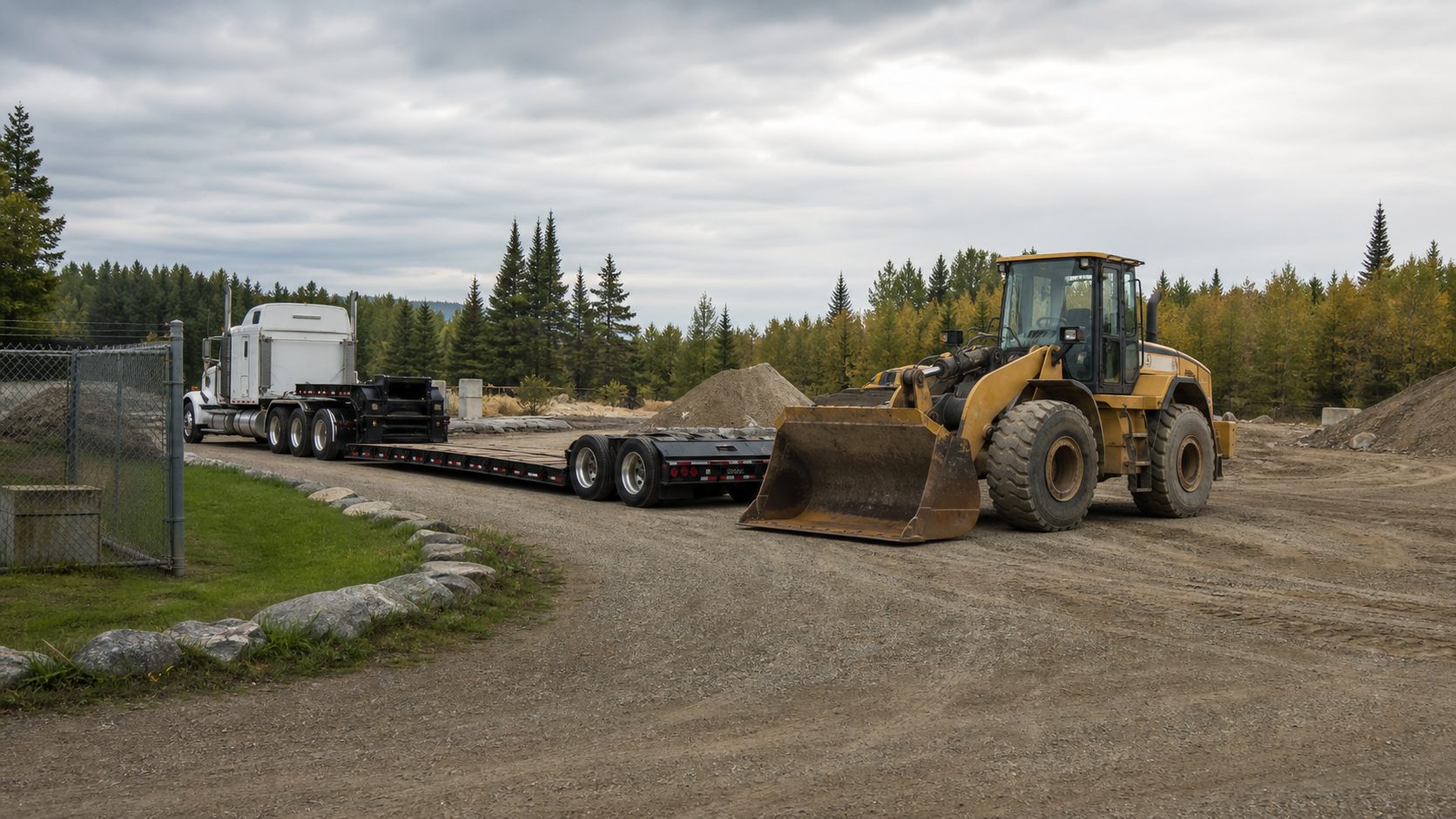
Site access controls loading
Loaders may sit in yards, pits, jobsites, farms, or industrial locations. The site needs enough room and firm surface for loading and departure.
Include gate, slope, ground, and turnaround notes.
Loader transport checklist
A good request connects loader specs with the site where it sits.
- Model and approximate weight
- Bucket or attachment details
- Tire and operating condition
- Dimensions if available
- Pickup access and loading support
- Delivery contact