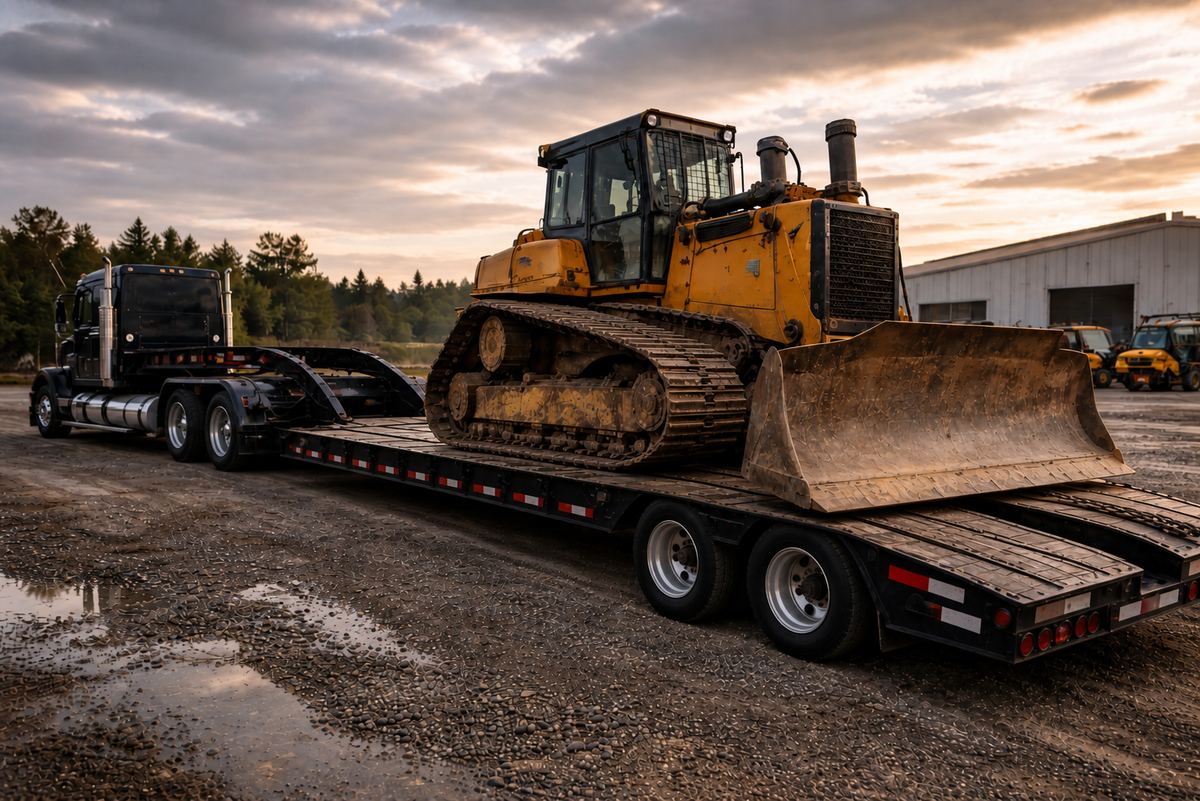
Weight affects more than price
A weight estimate helps with trailer selection, loading review, securement, and route planning. It is not just a pricing detail. A machine that is heavier than expected may need different equipment or more review before it can be moved.
Even when exact weight is unavailable, a model number, listing, plate photo, or manufacturer spec can help. The estimate should be treated as a planning detail, not a guess to hide uncertainty.
An approximate listed weight with photos and model details is better than no weight context at all.

Attachments and fluids can change assumptions
Published weights may not include every attachment or configuration. Buckets, blades, forks, counterweights, extra implements, fuel, or modifications can change the practical hauling weight.
If attachments are included, describe them and send photos. If the machine has been modified or is carrying extra parts, include that detail before quote review.
Manufacturer specs may describe the machine without extra implements.
The actual move may include attachments, parts, or a configuration that changes the total load.
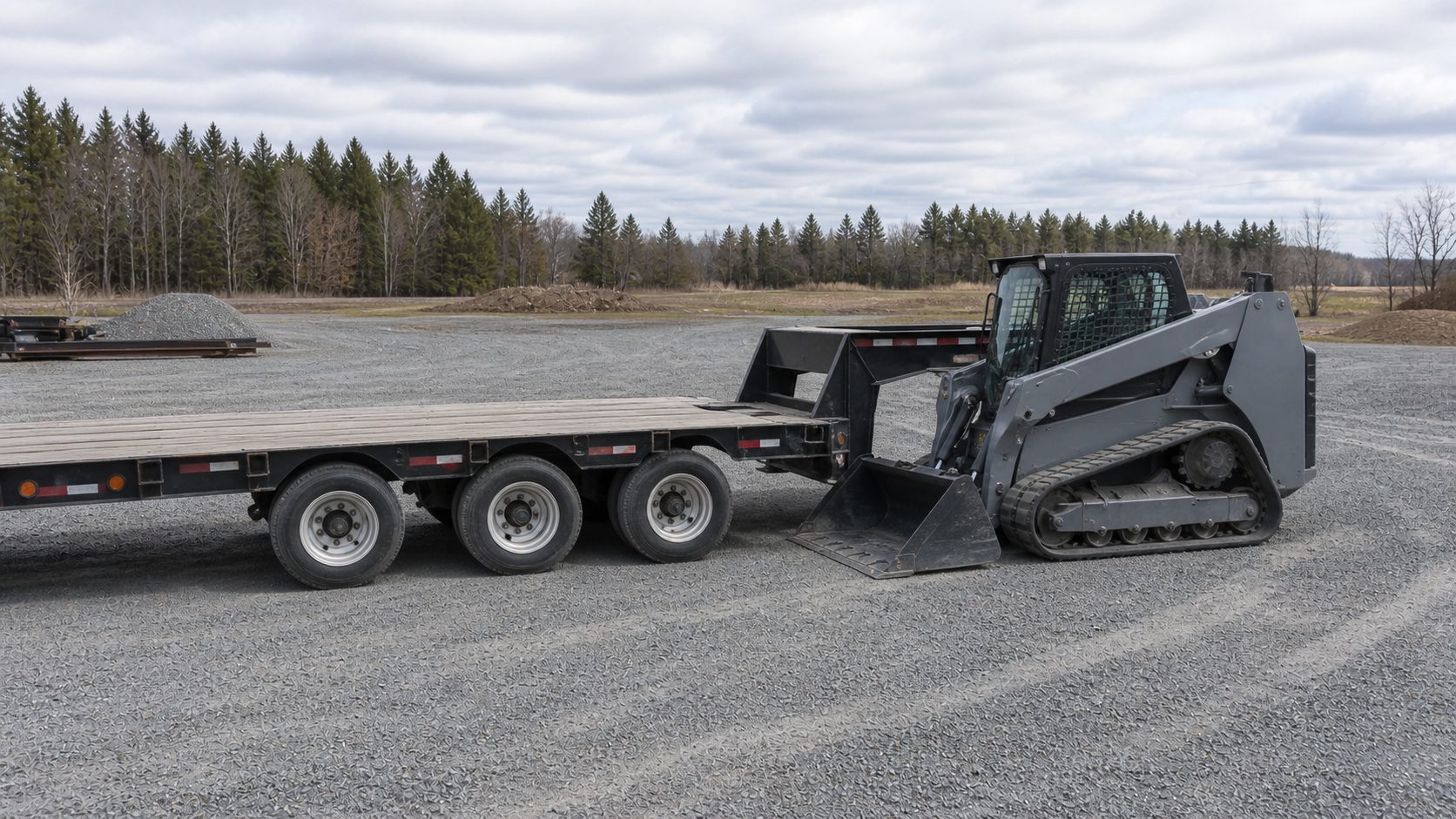
Weight connects to loading and site conditions
The heavier the equipment, the more loading surface and access details matter. Soft ground, slopes, tight yards, weak surfaces, or limited room can make loading more complicated.
A machine may be within a normal hauling range but still need review if the site is difficult. That is why weight and access should be discussed together.
How to send weight information
Send the listed weight if you have it, but also send the source. A listing, model plate, manufacturer page, or seller note each carries a different level of confidence.
If weight is unknown, send photos and model details so BEMAC can help identify what still needs to be confirmed before hauling.
If attachments are included, mention whether the listed weight includes them. If the unit is older, modified, or missing clear specs, current photos may help flag whether the estimate should be treated carefully.
- Listed or estimated weight
- Source of the estimate
- Model and configuration
- Attachments included
- Photos and access notes
Weight estimates are part of safety planning
The purpose of a weight estimate is not only to make a quote look more precise. It helps the move get reviewed safely and practically. Trailer capacity, loading approach, securement, and site conditions all depend on having a reasonable understanding of the load.
When a weight estimate is rough, say so. BEMAC can still start the conversation, but the uncertainty should be visible before equipment is scheduled.
A rough weight marked as rough is more useful than a guessed number presented as exact.
Why older or auction equipment needs care
Older equipment and auction equipment often come with incomplete or inconsistent weight information. A listing may copy a manufacturer spec, a seller may estimate, or an attachment may be included without being reflected in the number.
That does not stop the review, but it should change how the estimate is treated. Photos, model details, attachments, and configuration notes help BEMAC decide what still needs to be confirmed.
The goal is to avoid treating a rough number as a final answer when the move depends on getting the load context right.
This is especially important when the pickup location is not a simple open yard. If the equipment is heavy and the site is tight, soft, sloped, or remote, the weight estimate and access details need to be reviewed together.