
The route starts with real endpoints
A province-to-province move needs more than "Nova Scotia to Ontario" or "Ontario to New Brunswick." The pickup and delivery cities, contacts, access, and timing shape the review.
A carrier may be able to work with nearby points, flexible timing, or common corridors, but the route still needs real endpoints before the move can be reviewed properly.
Send city or community names first, then add exact addresses once the quote review moves forward.

Condition and access still matter
Longer-distance transport does not remove the basics. The vehicle still needs a clear condition description, keys, pickup contact, delivery contact, and enough room at both ends for safe loading and unloading.
A running vehicle at a dealer lot is different from a non-running private purchase in a tight driveway. That difference matters even if both are traveling between the same provinces.
A running vehicle with confirmed contacts and flexible timing is easier to review.
A non-running vehicle with uncertain access needs condition and pickup details before timing can be discussed.
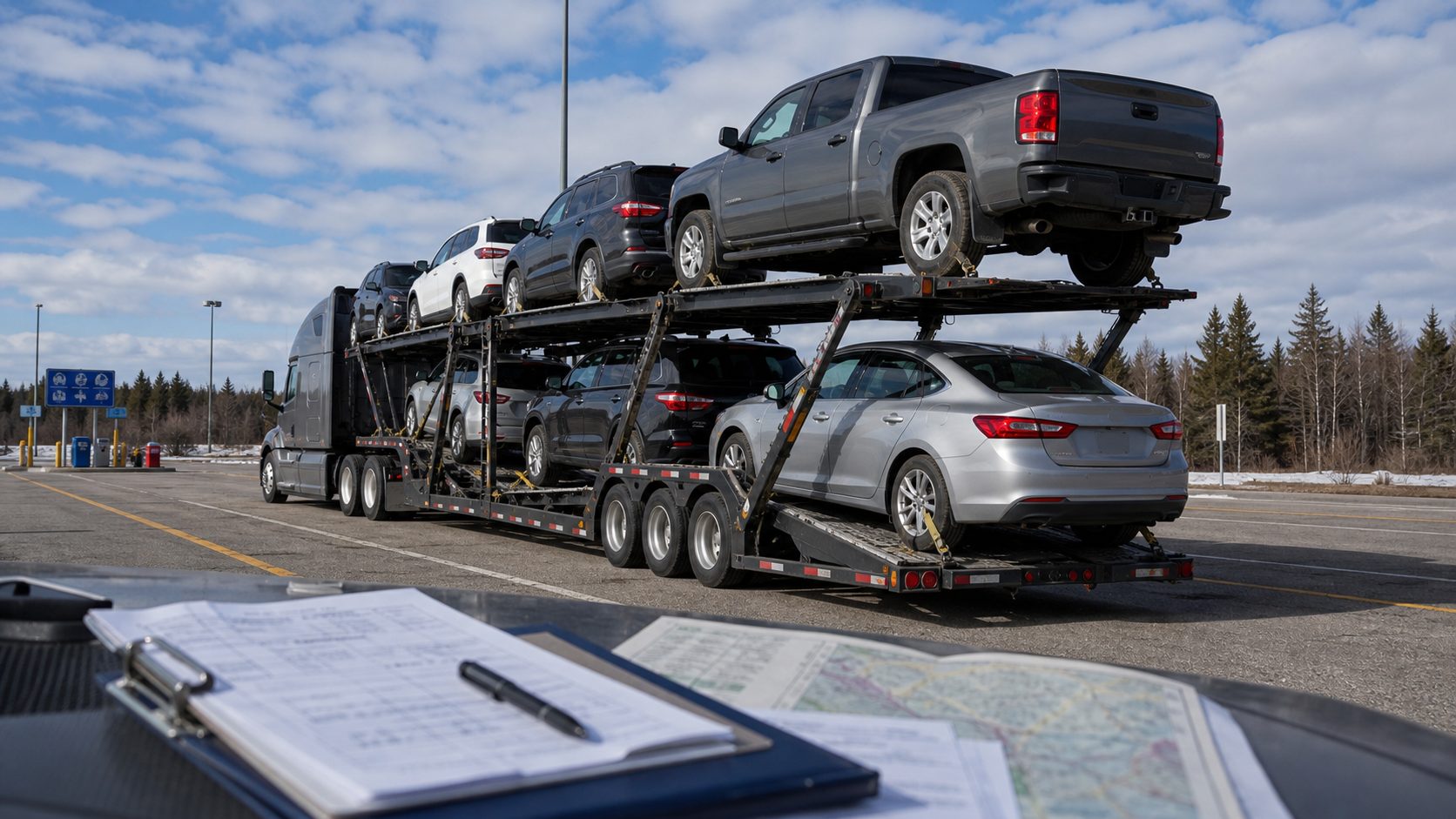
Flexible windows can help corridor planning
Interprovincial moves often fit better when pickup and delivery windows have some flexibility. A fixed deadline may still be possible, but it should be explained early so the timing can be reviewed honestly.
If the vehicle is being bought, sold, delivered to a customer, or needed by a certain date, include that context. Timing is easier to discuss when the reason for the timing is clear.
What to send for interprovincial review
The strongest request includes the vehicle details, pickup and delivery cities, condition, contacts, photos, and timing. If exact addresses are not ready, city names and access notes can still start the conversation.
If the move crosses several provinces or includes a remote endpoint, include any access or staging concerns up front.
Interprovincial transport is usually easier when the customer is honest about flexibility. If pickup can happen within a range but delivery needs to land near a certain date, say that. If the vehicle must leave a seller lot by a deadline, that belongs in the request too.
- Pickup and delivery city
- Vehicle year, make, and model
- Running condition and keys
- Pickup and delivery contacts
- Timing or flexibility
- Photos if condition or access is uncertain
Corridor moves reward clear expectations
A longer vehicle move often feels bigger to the customer than it does on the transport side. The practical review is still built from the same basics: what vehicle, what route, what condition, what contacts, what timing.
Clear expectations help both sides. The customer understands that timing is route-based, not instant. BEMAC understands whether the move is flexible, urgent, dealer-related, private, or tied to a purchase.
For interprovincial moves, explain where timing is flexible and where it is not.
What changes between provinces
The practical difference between a local vehicle move and an interprovincial move is not only distance. Timing becomes more route-dependent, pickup and delivery windows matter more, and small access problems can become larger because the carrier is working across a longer plan.
A vehicle that is not ready at pickup can affect more than one stop. A delivery contact who is unavailable can create problems at the end of a long route. That is why clear contacts and realistic timing matter so much.
When the vehicle, route, and contacts are prepared, interprovincial transport becomes much easier to review and explain.