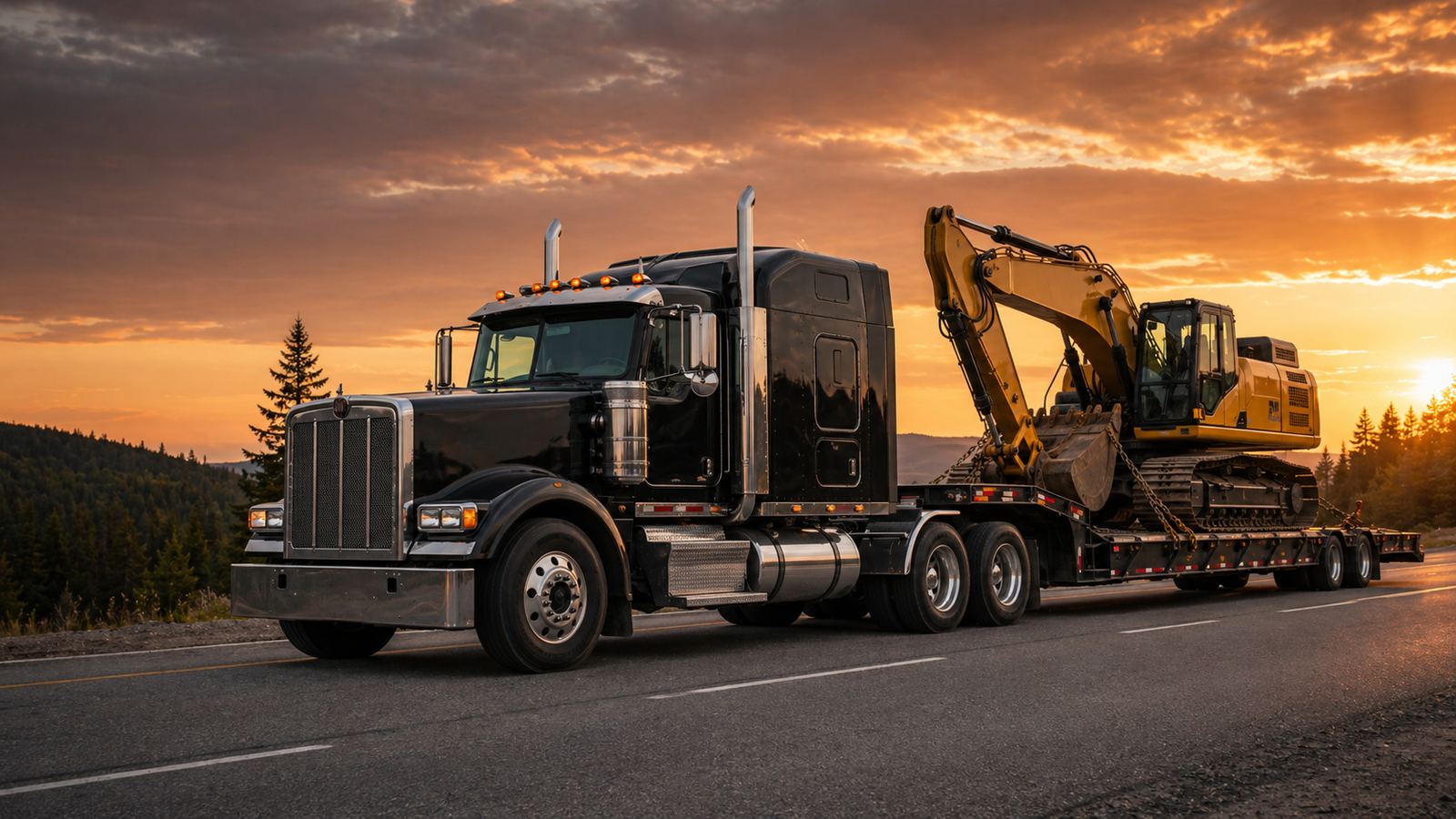
Remote community moves start with destination reality
The destination is more than the community name. A remote delivery needs a receiving contact, unloading location, equipment support, timing expectations, and awareness of how the load reaches the community.
For equipment, the question is not only whether it can be transported, but how it can be received and unloaded at the far end.
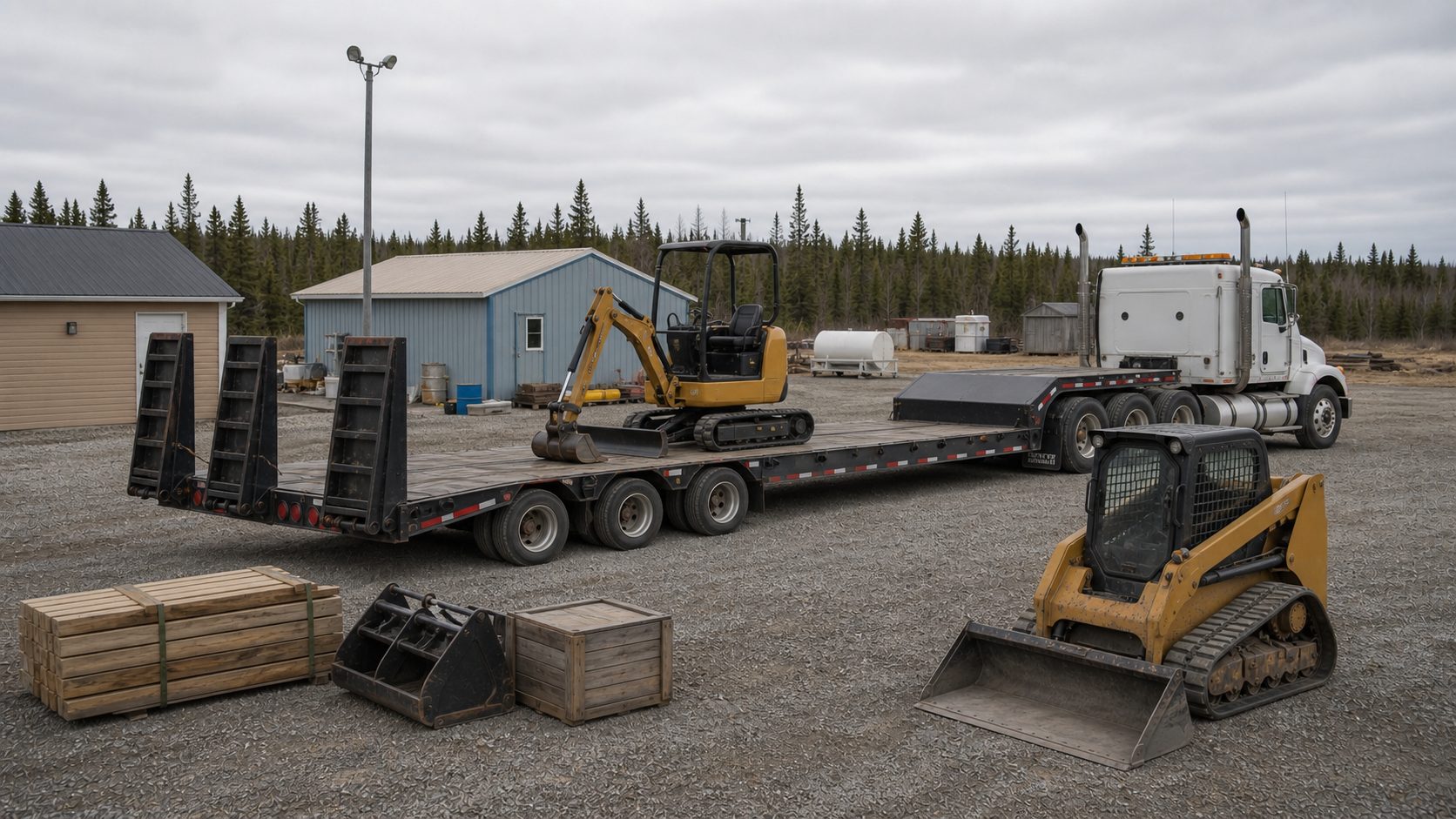
Staging and transfer points may be part of the route
Remote destinations may require staging before the final leg. That can involve yards, terminals, transfer points, seasonal routes, marine connections, or local coordination.
A quote request should include what is known about the final route and who can confirm local receiving details.
A remote move is not only a long-distance haul. It may be a chain of connected transport steps.
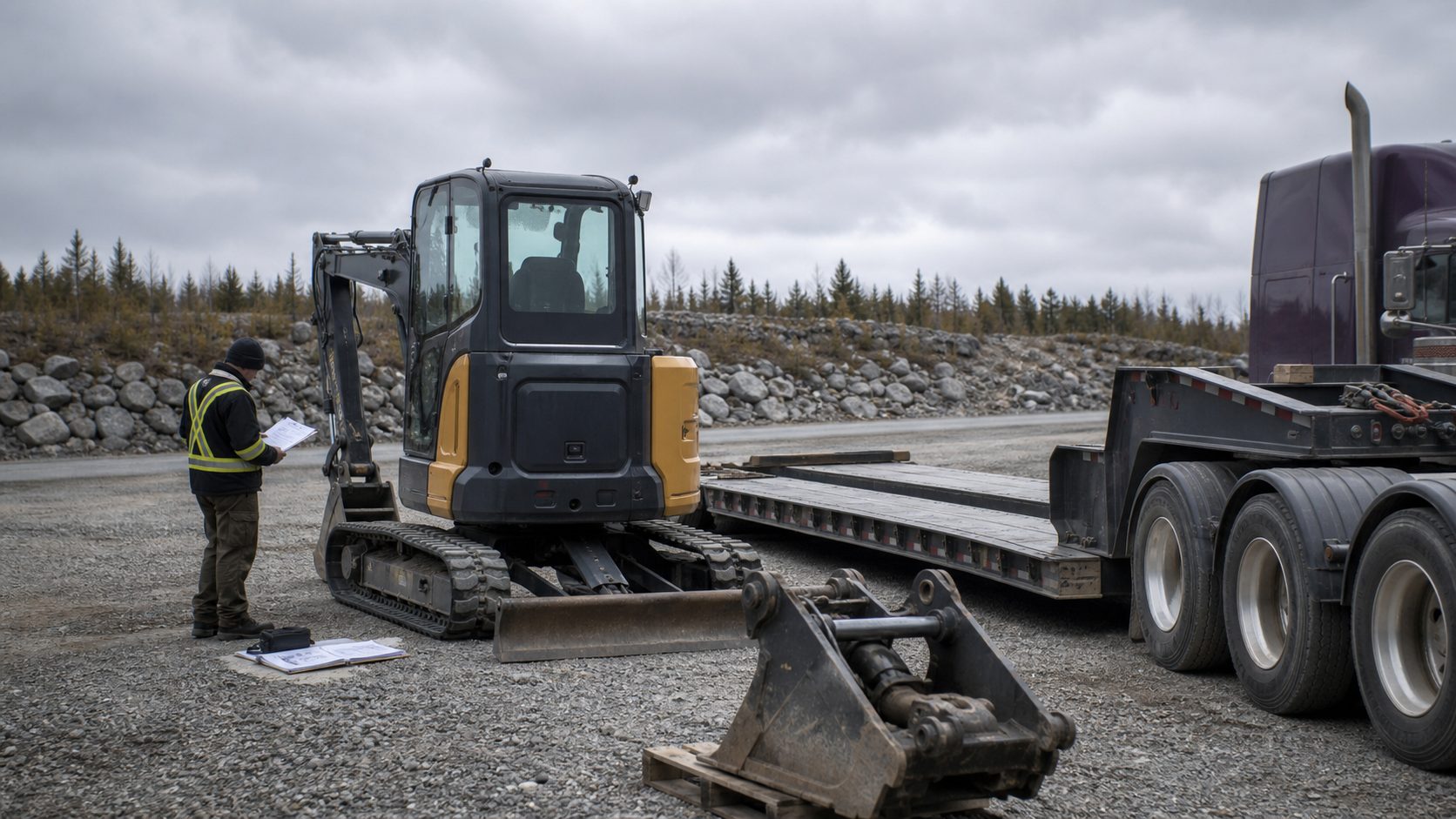
Machine details need to be reliable
When the destination is remote, missing equipment details are harder to fix later. Dimensions, weight, attachments, running condition, and photos should be gathered before the move is treated as ready.
If unloading equipment is limited at destination, that should be discussed early.
The best preparation reduces late surprises
Remote moves reward clear communication. The earlier the route, staging, destination contact, unloading plan, and machine details are known, the easier the request is to review honestly.
If some details are uncertain, identify who can confirm them.
- Exact destination and receiving contact
- Machine specs and photos
- Attachments and condition
- Known staging or transfer points
- Seasonal timing constraints
- Unloading support at destination