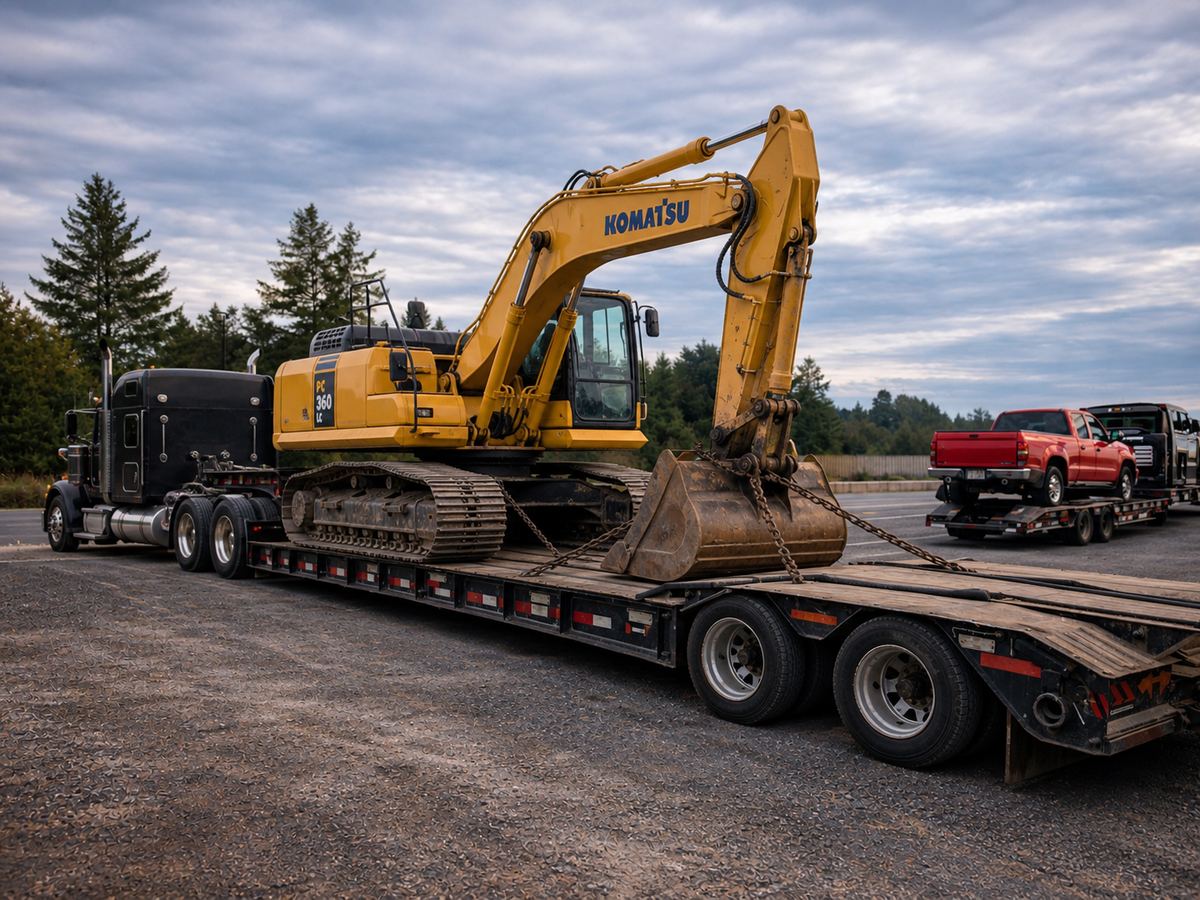
Identify the exact excavator setup
Mini excavators, mid-size excavators, and larger machines can vary widely in weight and dimensions. The model helps, but current configuration is just as important.
Mention bucket size, extra buckets, thumb, blade, cab, canopy, track condition, and whether attachments are included or traveling separately.
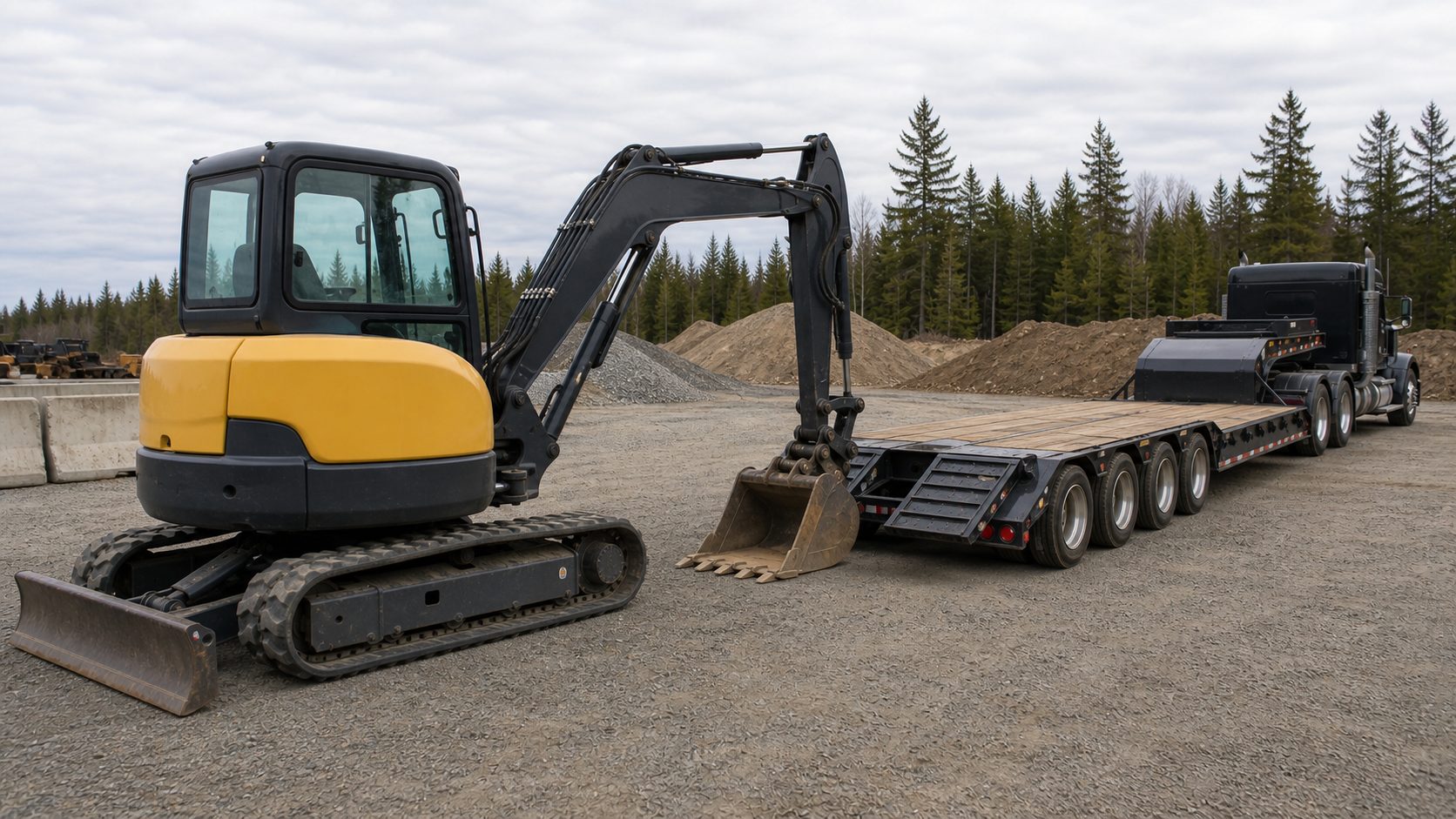
Bucket and boom position can affect fit
Excavators are not just rectangular loads. Boom position, bucket orientation, blade, counterweight, and attachments can change length, height, and trailer fit.
Photos from the side, front, rear, and attachment area help show how the machine is currently positioned.
A side photo that shows the full boom, bucket, tracks, and counterweight can answer several transport questions at once.
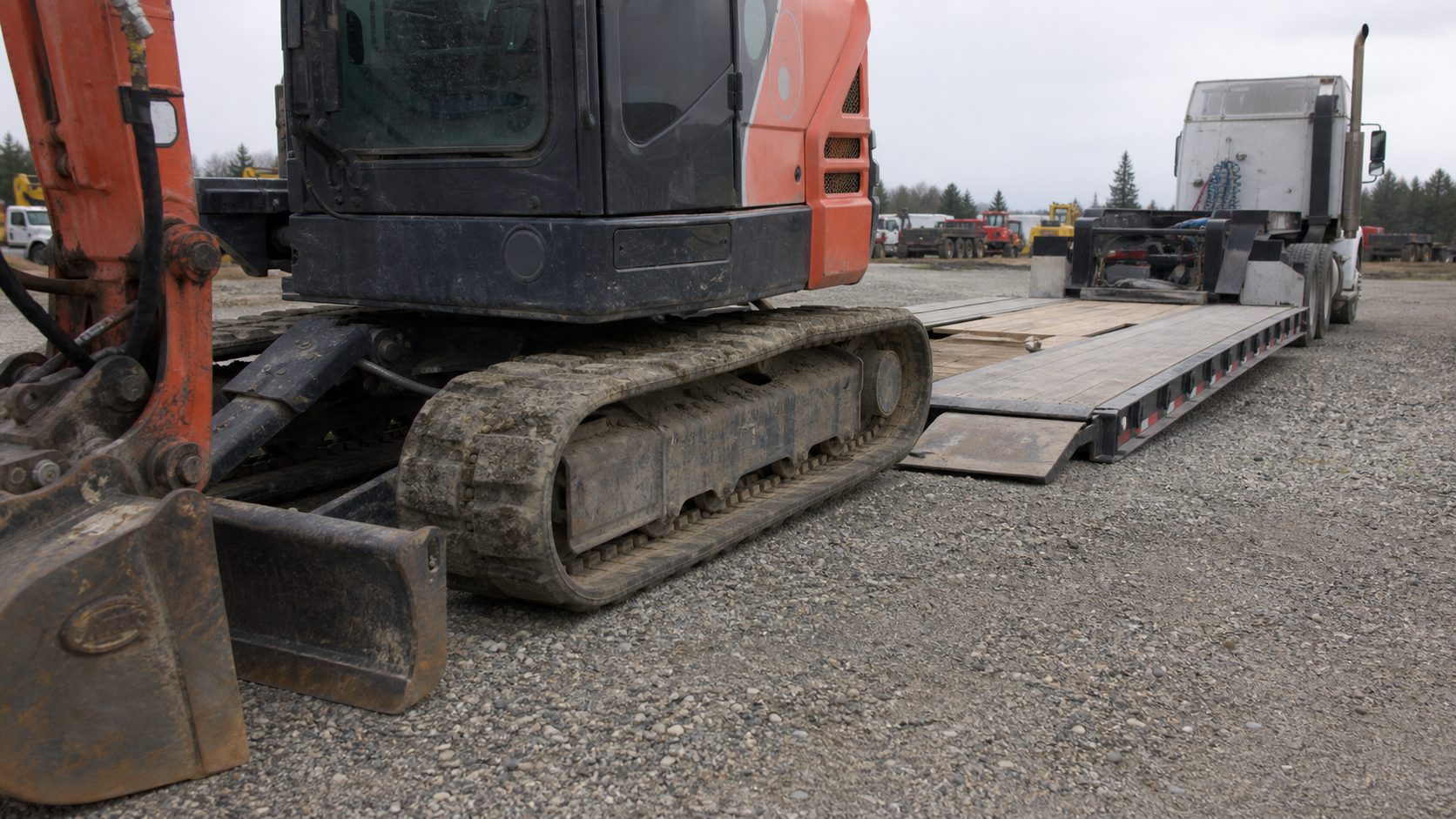
Tracks and loading condition matter
Track condition affects loading. A machine that runs and tracks normally is different from one with a dead battery, damaged track, weak hydraulics, or unknown operating condition.
If an operator or loading support is available at pickup or delivery, include that information.
The checklist is simple but important
Most excavator transport issues can be reduced by sending machine details, current photos, and access notes before the pickup is treated as ready.
If the machine is at an auction, dealer, jobsite, or rural property, include the release and site contact details as well.
- Model and approximate weight
- Length, width, and height if known
- Bucket and attachments
- Track and operating condition
- Pickup and delivery access
- Operator or loading support