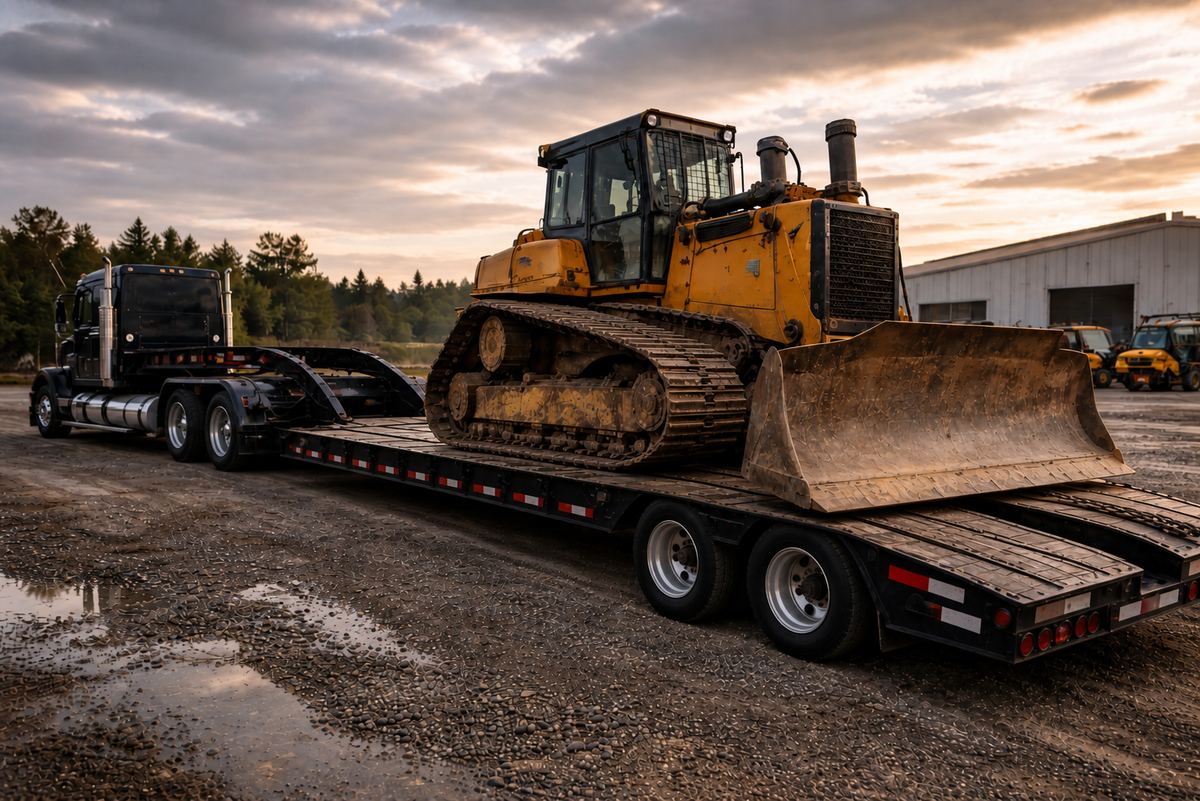
Blade width is often the first question
A dozer can be described by model, but the blade is what often changes transport width. Straight blades, angle blades, and attachments may affect whether the load needs extra review.
If the blade can be angled, removed, or narrowed, include that. If it must travel as-is, say so.
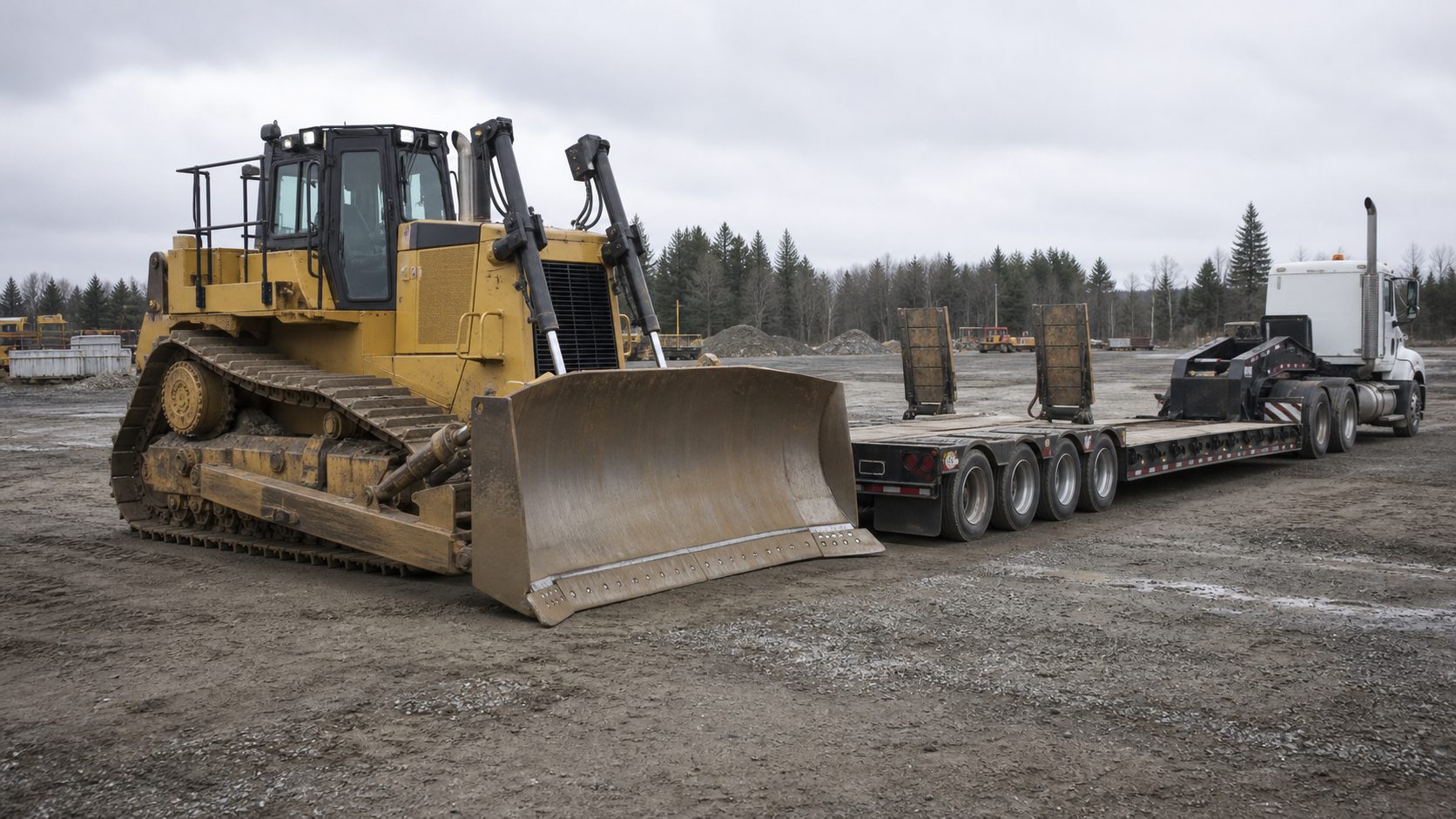
Weight and tracks affect loading
Bulldozers are dense machines. Weight estimates, track condition, operating condition, and loading surface matter for planning.
If the machine has not moved recently, confirm whether it starts, steers, tracks, and can be loaded under its own power.
Runs, tracks, blade position known, firm loading area, site contact available.
Older dozer, uncertain operating condition, unknown blade width, soft yard, or no loading contact.
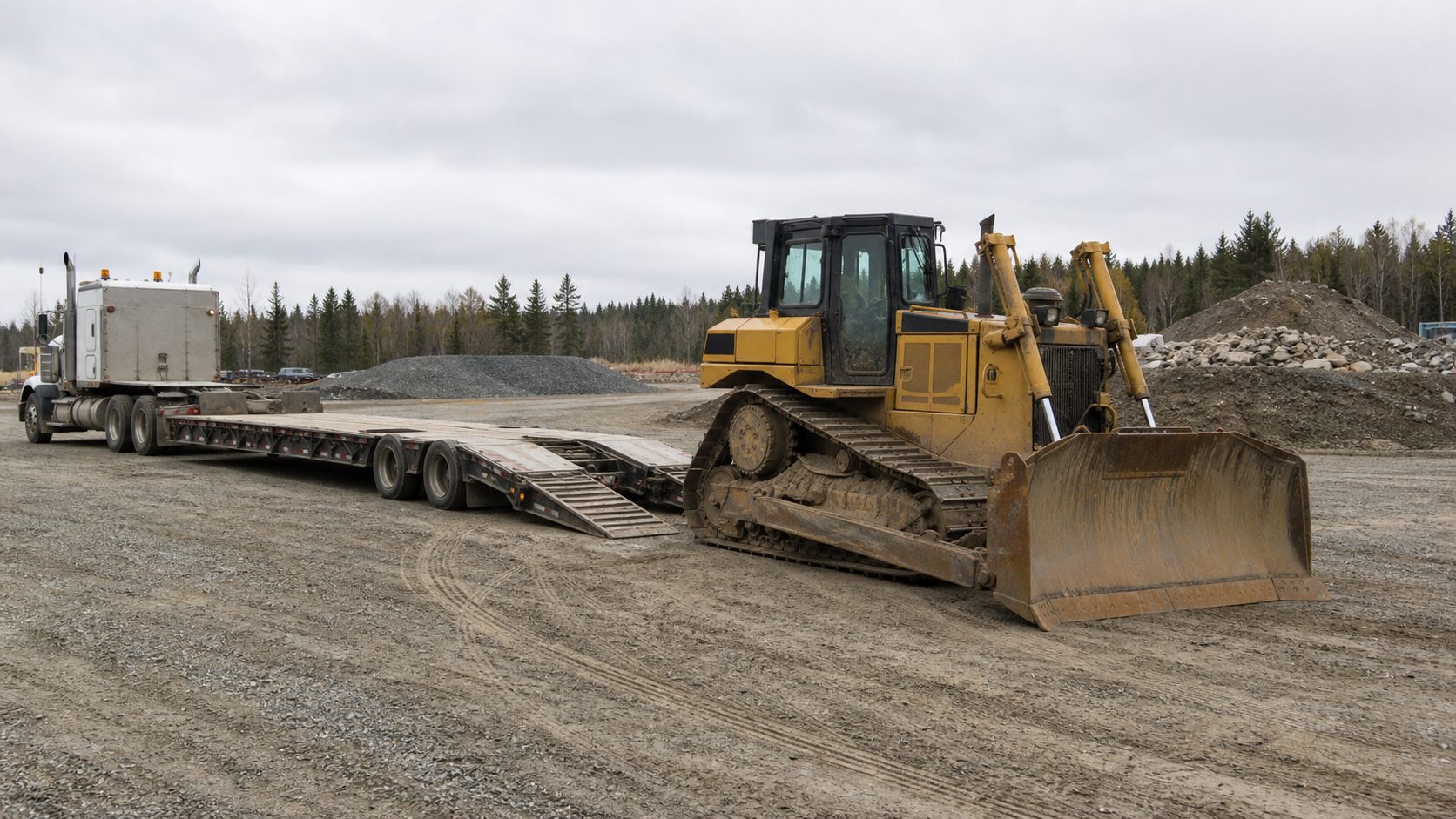
Site access can limit an otherwise movable dozer
Dozers often sit on jobsites, farms, pits, or industrial properties. The site may have room for equipment but not enough room for transport loading.
Send photos of the dozer and the loading area. Include slopes, ground condition, gates, road approach, and whether other equipment can help if needed.
Good dozer details reduce route uncertainty
The more clearly the blade, weight, condition, and site access are described, the easier it is to review whether the move is routine or needs more route planning.
Dozer moves are not the place for guessed widths or vague access notes.
- Model and approximate weight
- Blade width and type
- Track and running condition
- Loading surface and access
- Pickup and delivery contacts
- Photos from all sides