
The ferry is part of the route, not a side note
When a move depends on a ferry, timing is shaped by sailing schedules, check-in windows, capacity, weather, and connection points on both sides.
A transport request should make the island, terminal, or ferry-dependent destination clear at the start.
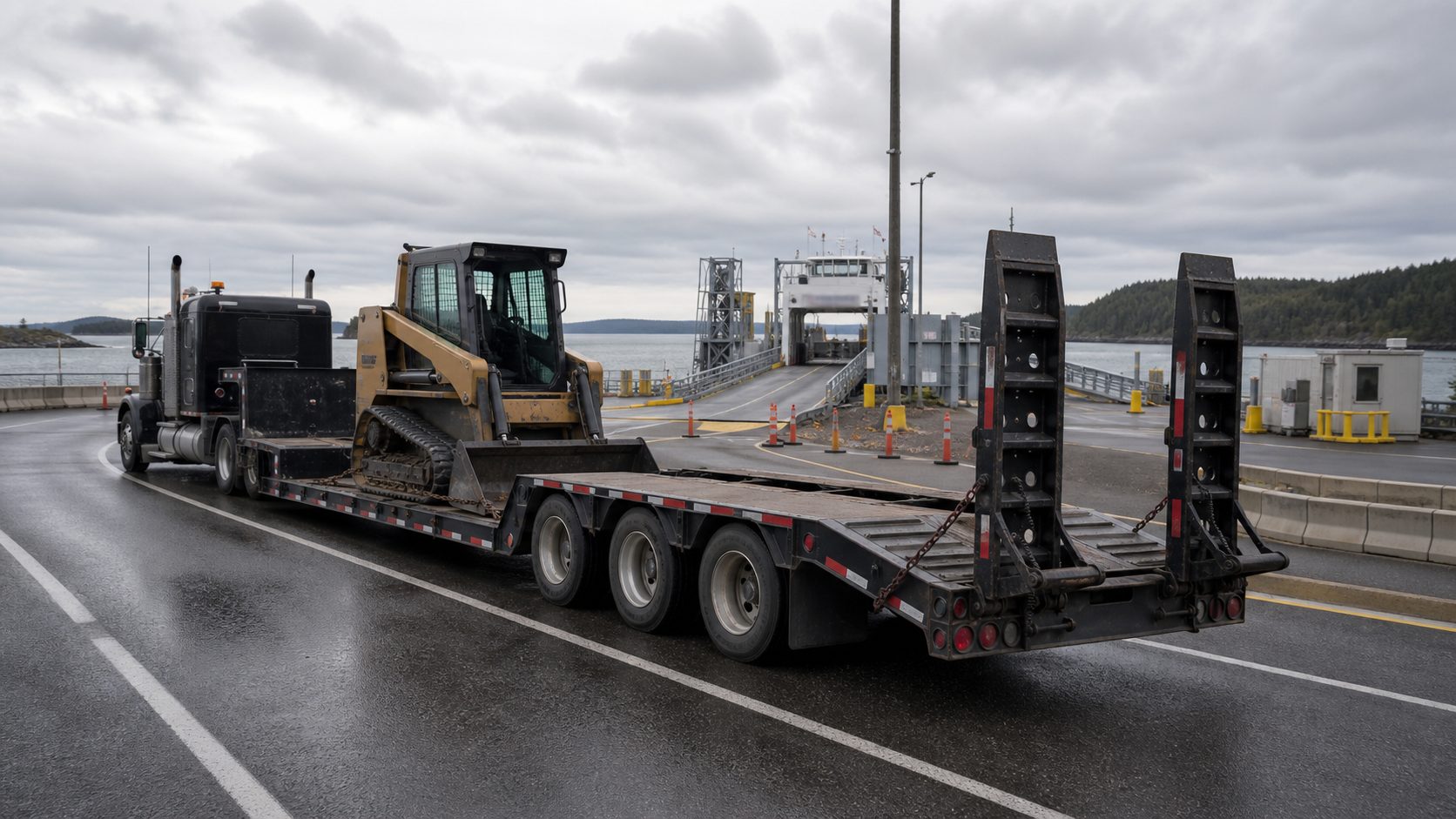
Staging can matter more than distance
A short distance on a map can become more complex when it depends on the right ferry connection. Staging near the terminal, appointment timing, and receiving contact availability may matter more than mileage.
If the delivery site has limited hours or needs equipment to unload, that timing should be matched against ferry arrival reality.
Ferry timing can turn a simple pickup and delivery into a coordinated route with staging points.
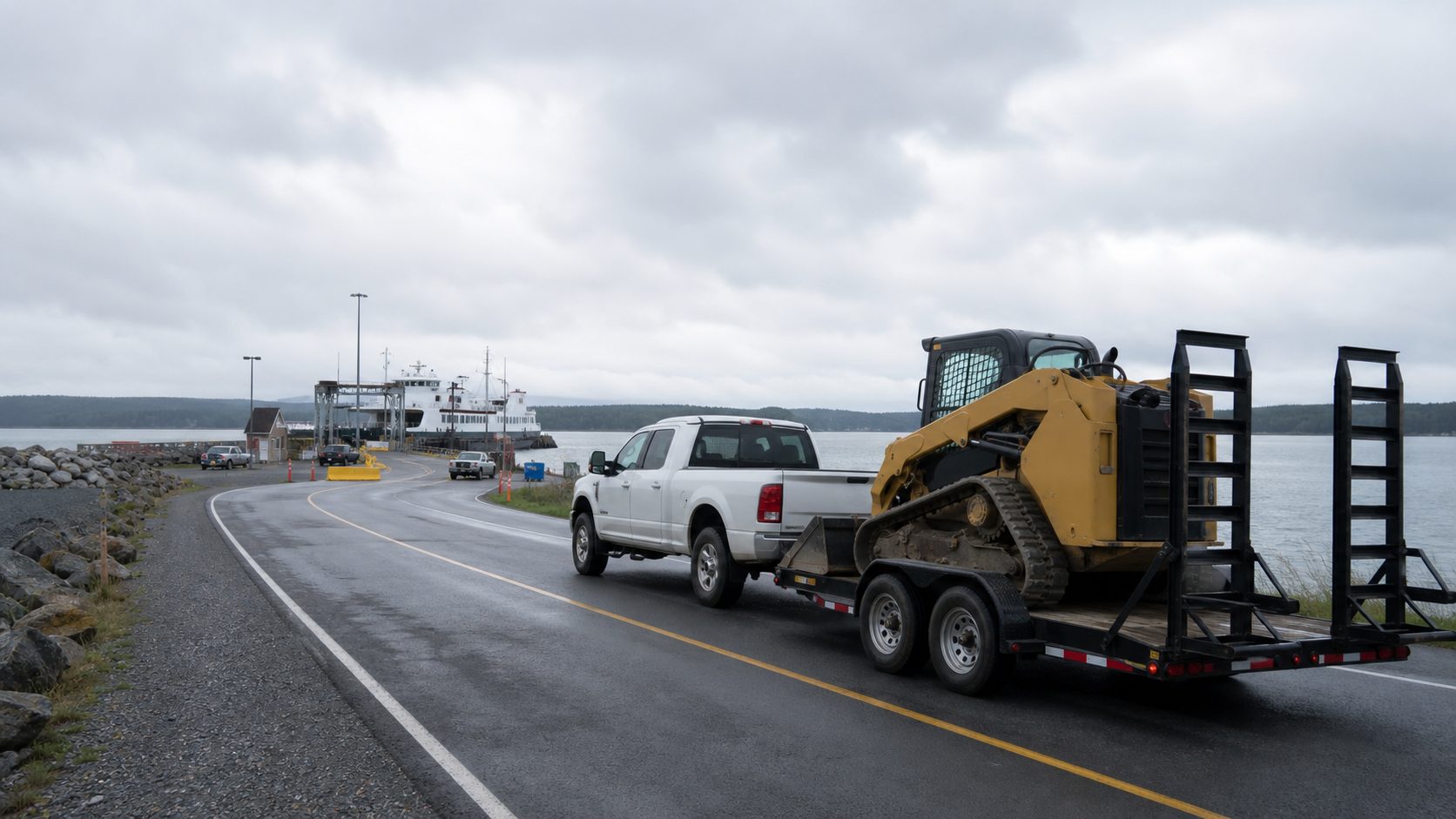
Weather and seasonal pressure affect planning
Ferry-dependent moves can be affected by weather, seasonal traffic, sailing changes, and remote access after arrival. This is especially important for equipment or larger vehicles.
Flexible timing can help when the route is weather-sensitive or dependent on limited crossings.
Useful ferry-route details
The best ferry-related request explains the actual pickup and delivery points, whether a ferry is required, whether timing is flexible, and who can receive the load after arrival.
That helps the route get reviewed as a whole instead of as two disconnected road segments.
- Ferry-dependent pickup or delivery point
- Preferred timing and flexibility
- Vehicle or equipment size
- Terminal or staging constraints
- Delivery contact and unloading details