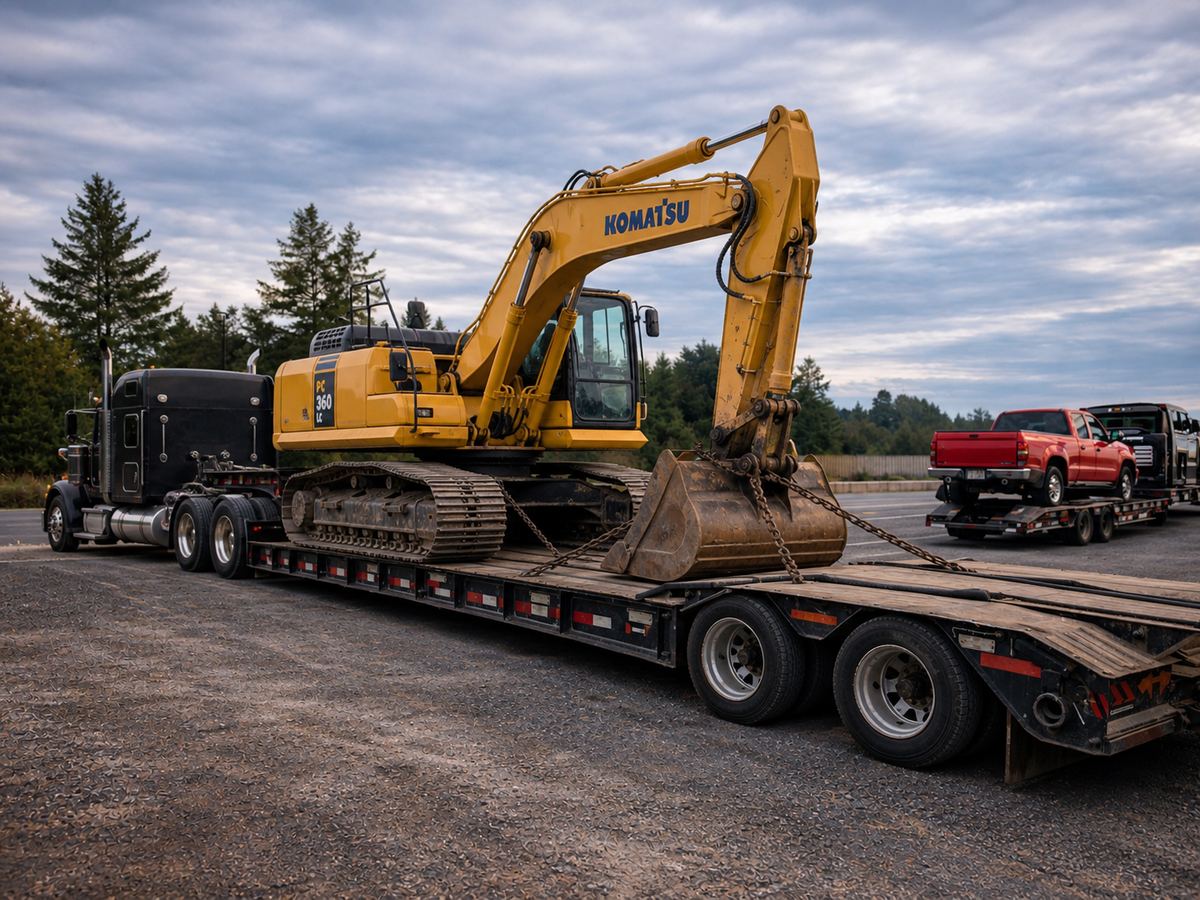
Confirm the model and setup
Mini excavators vary in size and configuration. The model helps, but the current setup matters too: bucket, blade, thumb, canopy, cab, extra buckets, and track condition.
If the excavator was bought at auction or from a seller, current photos can confirm what is included.
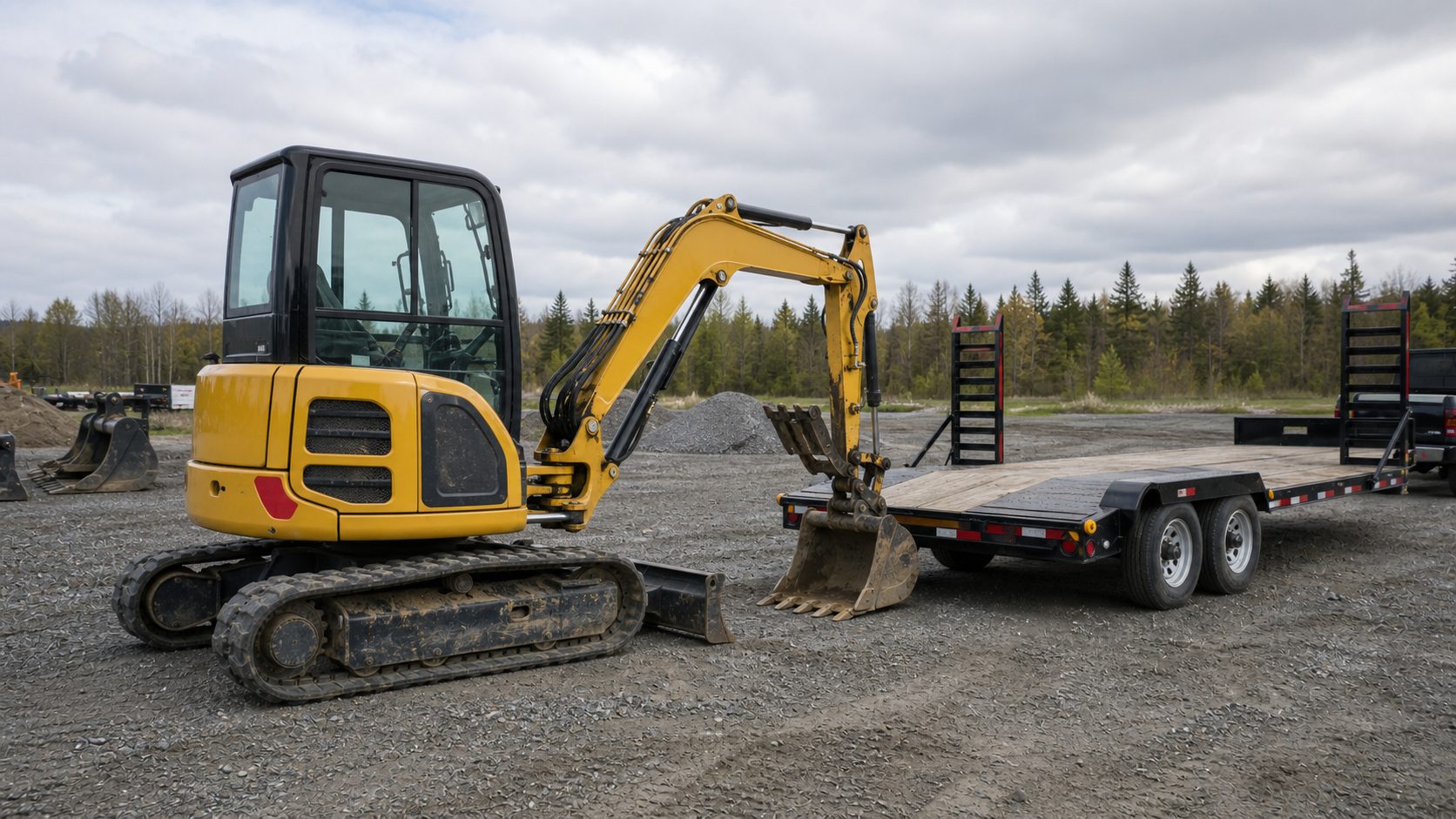
Bucket and blade affect dimensions
Bucket position, blade width, boom position, and attachments can affect trailer fit. A side photo that shows the whole machine is especially helpful.
If extra buckets or attachments are included, list them separately.
Mini excavator with bucket attached, blade included, extra bucket loose beside machine.
Model unknown, attachment not shown, loading condition unclear.
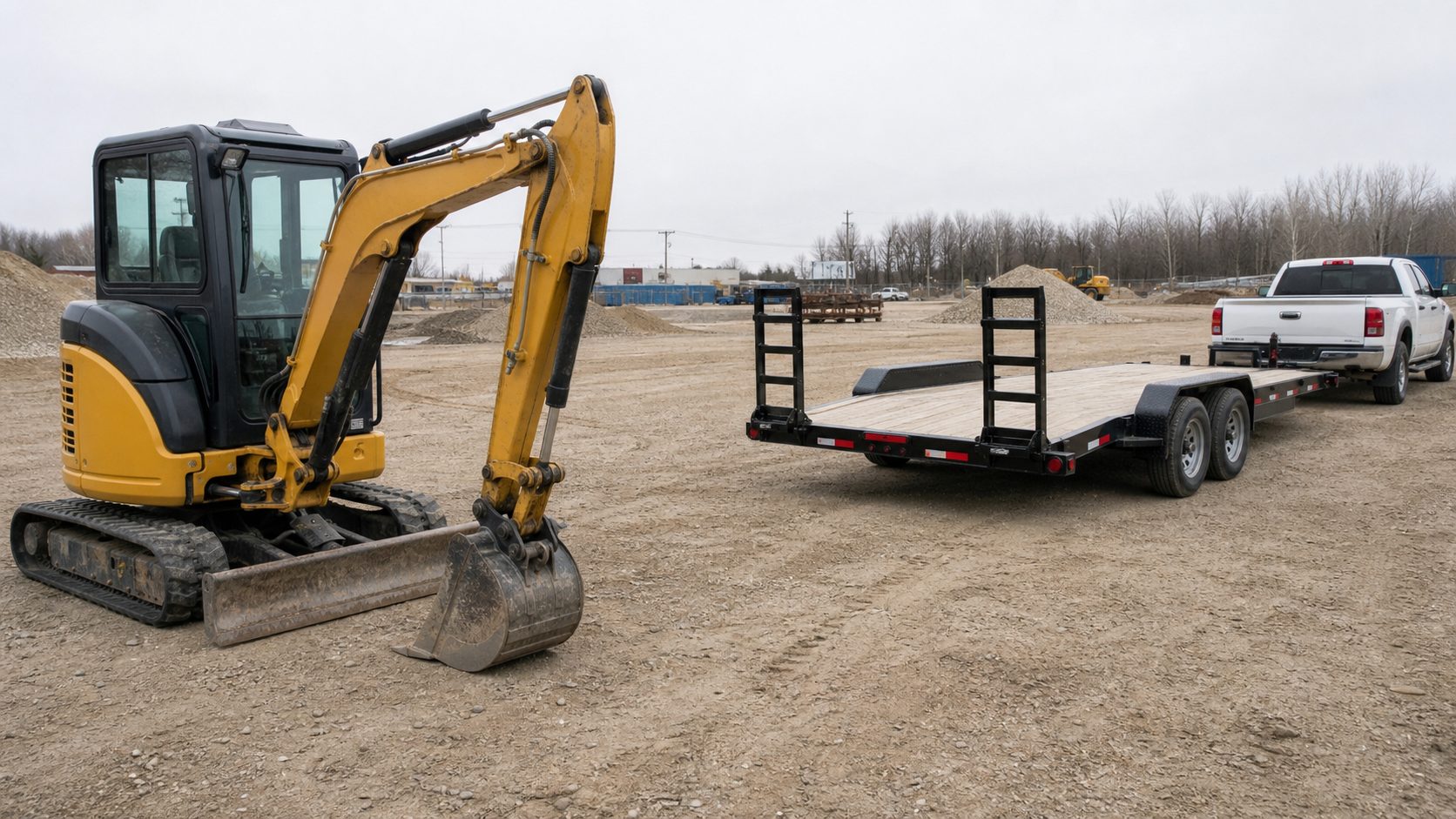
Loading condition matters
Confirm whether the excavator starts, tracks, turns, and can load under its own power. A dead battery, track issue, or hydraulic problem changes the pickup plan.
Site access should also be described, especially at jobsites or rural properties.
Mini excavator prep checklist
A compact machine can still create transport delays when attachment, condition, or access details are missing.
- Model and approximate weight
- Bucket, blade, thumb, or extra attachments
- Running and track condition
- Length, width, and height if known
- Pickup and delivery access photos
- Site contacts