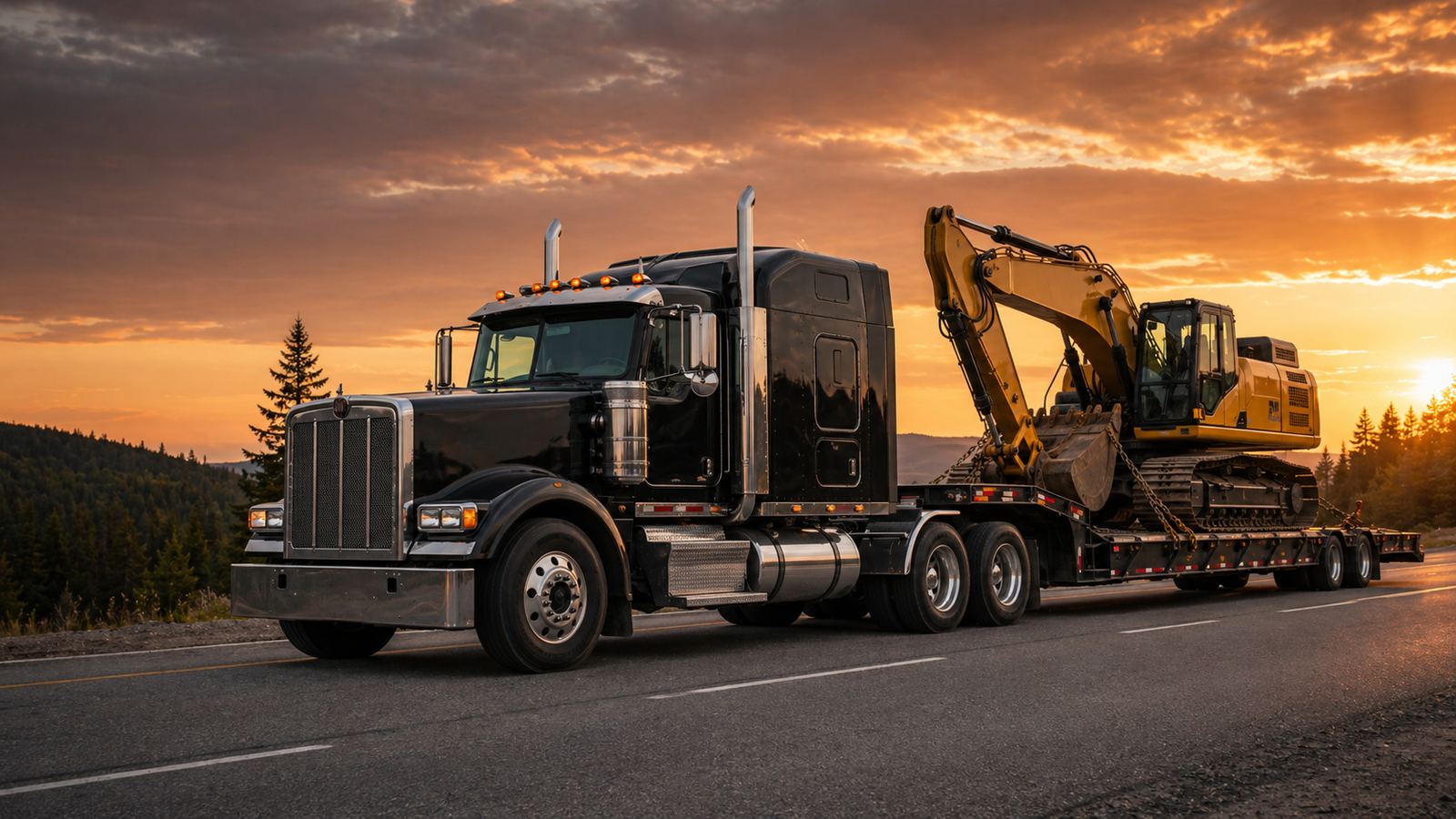
The move starts before the truck arrives
A construction equipment move is easiest when the machine is accessible, attachments are accounted for, and the pickup site contact knows the plan.
If the machine is blocked by materials, parked in a tight area, or waiting on an operator, the schedule can shift quickly.
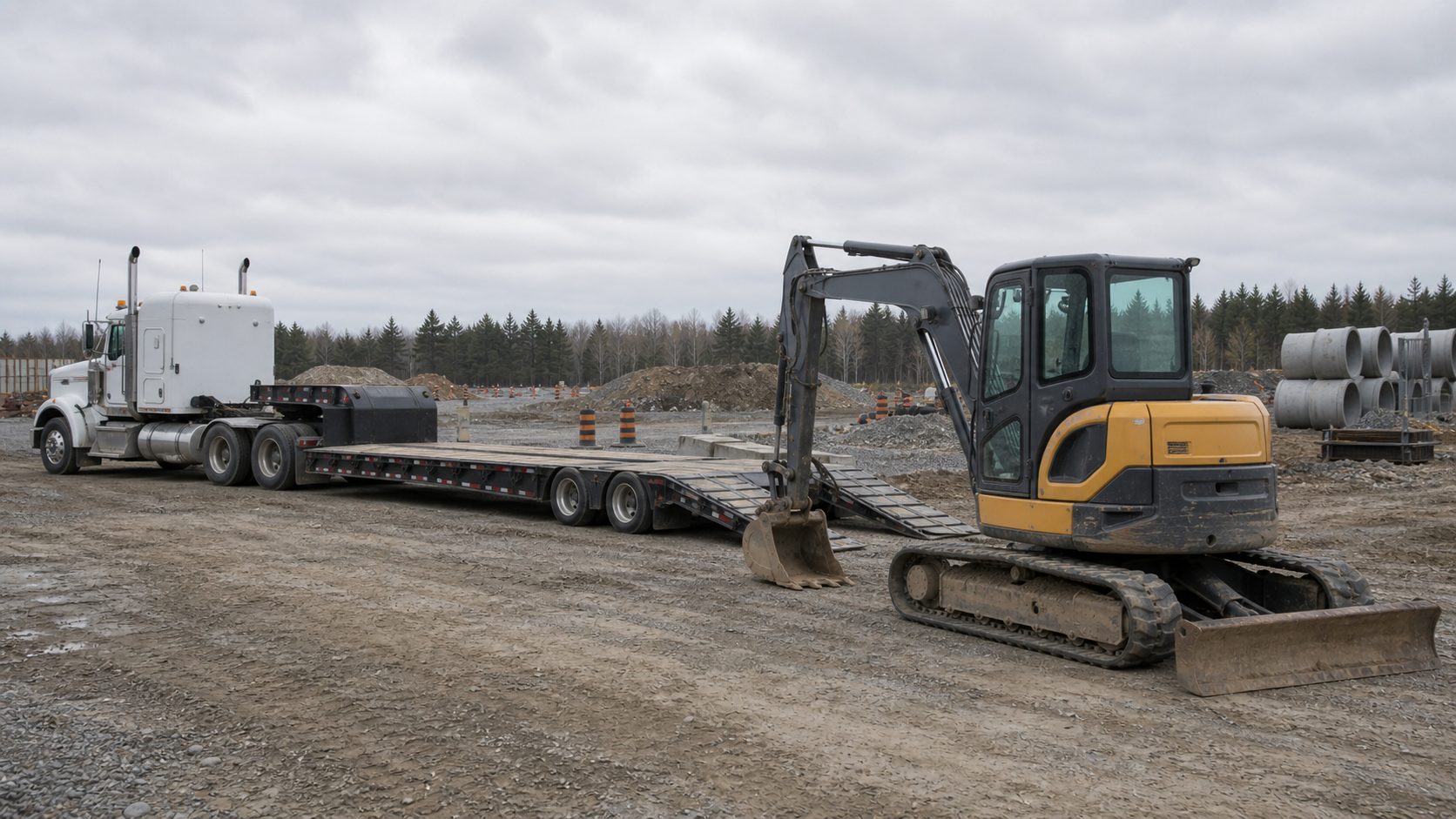
Two sites need to be ready
Pickup readiness is only half the move. The next jobsite needs unloading room, access, a contact, and awareness that equipment is arriving.
If the destination has narrow roads, restricted hours, mud, snow, steep approaches, or no operator, those details should be included before scheduling.
A move can be delayed by the destination even when the pickup site is organized.
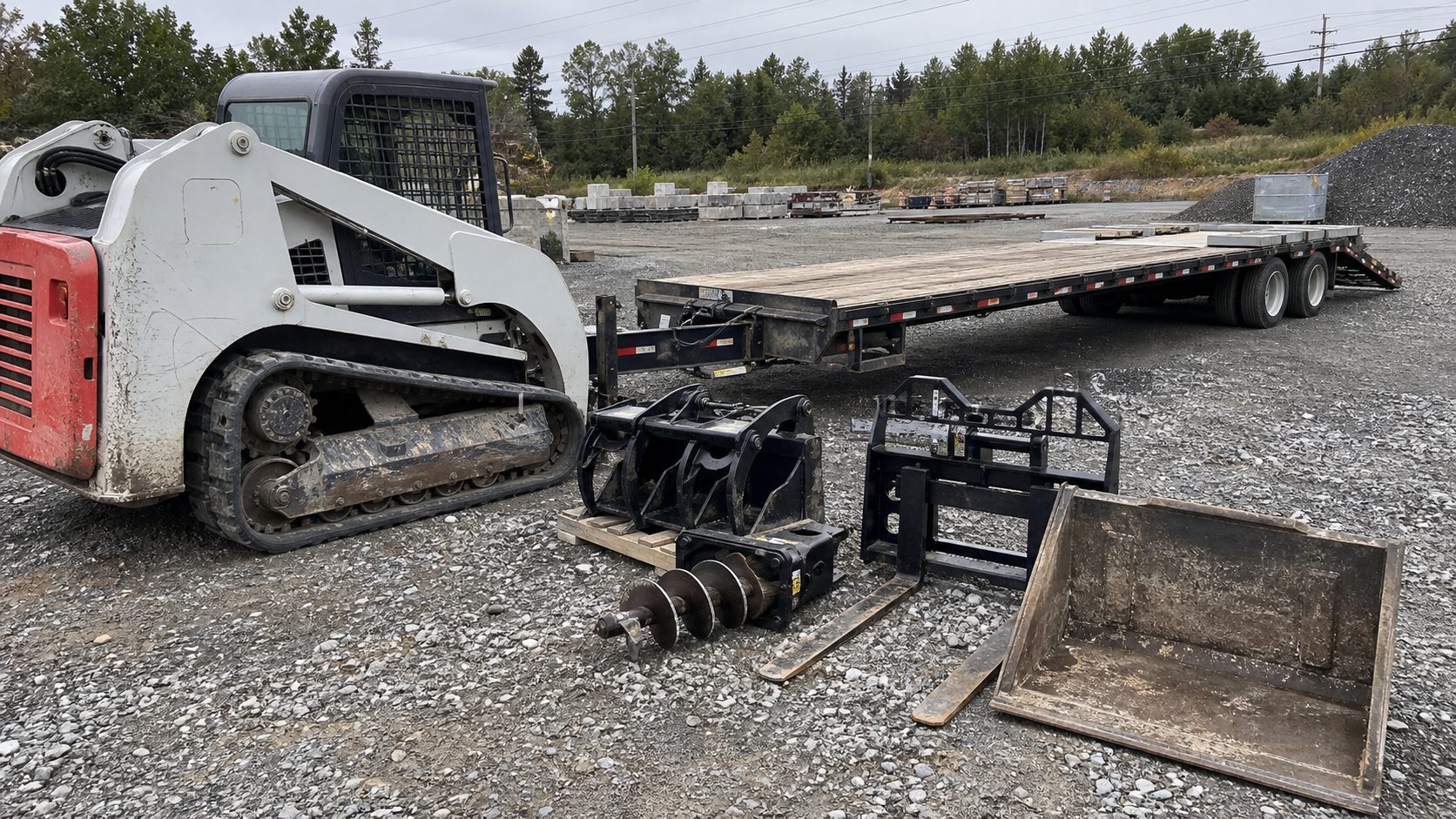
Attachments can get lost in the rush
Buckets, forks, blades, brooms, and other attachments may be needed at the next site. They may also be separated from the machine during active work.
List what goes with the machine and confirm whether attachments are attached, loose, palletized, or sitting elsewhere on site.
A good plan protects the schedule
Contractors often need equipment moved because the next crew is waiting. The transport request should make that urgency understandable without hiding the details that affect the move.
Clear site contacts, loading room, machine condition, and destination readiness make the schedule easier to review honestly.
- Pickup site contact
- Machine and attachment list
- Loading area and access notes
- Delivery site contact
- Unloading room
- Timing constraints